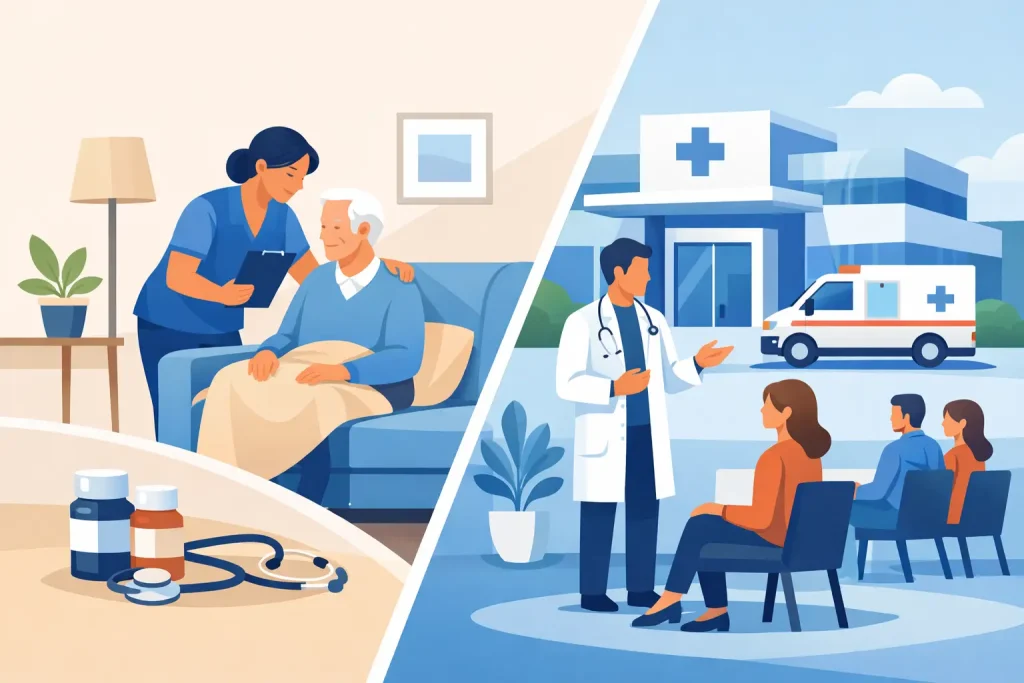
A feverish child at midnight, an older parent who struggles with stairs, or a painful recovery after surgery can turn a simple clinic visit into a major task. When comparing home care versus clinics, the right choice is not always about convenience alone. It is about matching the setting to the patient’s condition, the care required, and how quickly support is needed.
For many families in Dubai, professional care at home can reduce stress without compromising clinical attention. In other situations, a clinic or hospital remains the safer and more appropriate place to be. Knowing the difference helps you make a calm, informed decision when it matters most.
Home Care Versus Clinics: The Key Difference
A clinic brings patients to a central medical setting, where doctors, equipment, diagnostic services, and support staff are available in one location. Home healthcare brings qualified professionals to the patient, providing assessment, treatment, monitoring, and follow-up in familiar surroundings.
Neither option is automatically better. Clinics are designed for conditions that may require specialized equipment, imaging, multiple specialists, or immediate access to a wider clinical team. Home care is especially valuable when the patient is stable but needs timely, skilled support without the physical and practical burden of travel.
The question is less “Which is best?” and more “What does this patient need right now?”
When Home Healthcare Is the Better Fit
Home care works well when a patient needs professional medical attention but does not require emergency facilities or complex on-site diagnostics. It can be a practical option for children, seniors, new mothers, people recovering from procedures, and busy adults who need care without losing hours to traffic, waiting rooms, and transportation.
Comfort can improve the care experience
Patients often feel more relaxed at home. This can make a meaningful difference for elderly people with mobility limitations, children who are anxious in unfamiliar places, and patients who are tired or in pain after surgery. A home visit also allows the clinician to see the patient’s real environment, which may be useful when planning mobility support, medication routines, wound care, or ongoing elderly care.
For families, home care can also mean more focused time with the clinician. Instead of coordinating transport, parking, and childcare, family members can stay present during the visit and ask questions in a calmer setting.
It reduces avoidable travel and exposure
Traveling to a clinic can be difficult when someone is weak, contagious, recovering from treatment, or dependent on a caregiver. A nurse at home, doctor on call, or at-home lab test can remove that burden while keeping care organized.
This is particularly helpful for patients who need repeat services. Home physiotherapy, speech therapy, nursing support, and post-treatment monitoring are often more consistent when they fit naturally into the patient’s daily routine. The less exhausting the process feels, the easier it can be to keep appointments and follow a care plan.
Home care supports personalized follow-up
One clinic appointment may address a single concern. At-home care can be structured around continued support, whether that means dressing changes, medication administration, mobility exercises, newborn care, or regular vital-sign monitoring.
Personalization matters because recovery is rarely identical from one person to the next. A patient regaining strength after surgery may need physiotherapy sessions at times when pain and fatigue are manageable. An elderly relative may need nursing care that accounts for mobility, meals, family support, and comfort. These details are easier to address in the place where daily life happens.
When a Clinic Is the Right Choice
Clinics remain essential for many health needs. They are often the better option when a patient needs in-person specialist assessment, diagnostic imaging, a procedure requiring dedicated equipment, or coordinated care from several departments.
A clinic may also be preferable when symptoms are not straightforward and the doctor needs access to a broader range of tests during the same visit. For example, persistent symptoms that require imaging, specialist consultation, or immediate diagnostic work may be more efficiently managed in a clinical setting.
For routine preventive appointments, vaccinations, specialist reviews, and services that depend on clinic-based tools, attending a clinic can make good medical sense. The aim should always be appropriate care, not simply care in the most convenient location.
Emergencies require emergency services
Home healthcare is not a substitute for emergency care. Severe chest pain, sudden weakness on one side of the body, difficulty breathing, loss of consciousness, major bleeding, seizures, or serious injury require immediate emergency assistance.
In these cases, do not wait for a home visit or try to manage symptoms independently. Emergency teams and hospitals have the equipment, medications, and rapid intervention capabilities needed for life-threatening situations.
Comparing Time, Cost, and Convenience
The practical differences between home care and clinics are often what families notice first. A clinic appointment may involve travel time, parking, registration, waiting, and arranging help for children or an elderly family member. A home visit removes many of those steps and can be especially useful when a patient needs care quickly but is stable.
Cost depends on the service, insurance coverage, appointment time, and clinical requirements. A clinic visit may be less expensive for some routine consultations, while home care may offer greater value when transport is difficult, a caregiver would otherwise miss work, or a patient needs multiple follow-up visits. It is worth asking for clear pricing and confirming whether the provider is licensed, the clinician is appropriately qualified, and the recommended care plan matches the patient’s needs.
Convenience should never be separated from safety. The strongest home healthcare providers use licensed professionals, follow evidence-based practices, and have clear processes for escalation when a patient needs clinic or hospital care instead.
Choosing Home Care for Common Family Needs
Home healthcare is often a strong choice for specific situations that place extra pressure on families.
Parents may prefer a doctor at home when a child has a non-emergency illness and traveling would be difficult or disruptive. New parents may benefit from newborn support and nursing guidance in the comfort of their own home, where questions about feeding, sleep, and recovery can be addressed in context.
For older adults, at-home nursing and doctor visits can reduce the strain of transportation and long waits. This is especially relevant for people with chronic conditions, reduced mobility, or a need for regular observation. Families can also be more involved in discussions about treatment and daily support.
After surgery or hospitalization, home physiotherapy and nursing care may help patients transition safely back to normal routines. Consistent rehabilitation, wound monitoring, and professional guidance can make recovery feel more manageable while helping identify concerns early.
Busy professionals may choose at-home lab testing, IV therapy when clinically appropriate, or a doctor consultation to avoid postponing care because of a packed schedule. Fast access is useful, but the clinician should still assess whether home treatment is suitable for the symptoms involved.
Questions to Ask Before Booking
Before choosing a home visit or a clinic appointment, consider the patient’s symptoms, mobility, medical history, and urgency. Ask whether the service includes a licensed physician, nurse, or therapist, and whether the provider can coordinate next steps if further tests or hospital care are needed.
It also helps to ask what the visit involves. Will the clinician conduct a full assessment? Can samples be collected for lab testing? Is follow-up available? For ongoing needs, ask whether the same care team can support continuity so the patient does not have to repeat their history at every appointment.
For families in Dubai, Your Choice Healthcare provides professionally supervised home medical and wellness services, including doctor visits, nursing, therapy, mobile diagnostics, and care support for patients of different ages. The right service begins with a clear assessment of what is safe and appropriate for the patient.
Care Should Fit the Patient, Not the Other Way Around
A clinic offers valuable access to facilities and specialists. Home care offers comfort, privacy, and practical support when travel is difficult or unnecessary. Both have an important place in a family’s healthcare plan.
If the patient is stable, needs personalized attention, and would benefit from care in familiar surroundings, a qualified home healthcare visit may be the right next step. If symptoms are severe, uncertain, or require advanced testing, choose a clinic, hospital, or emergency service without delay. The most helpful decision is the one that brings the right level of care to the patient at the right time.