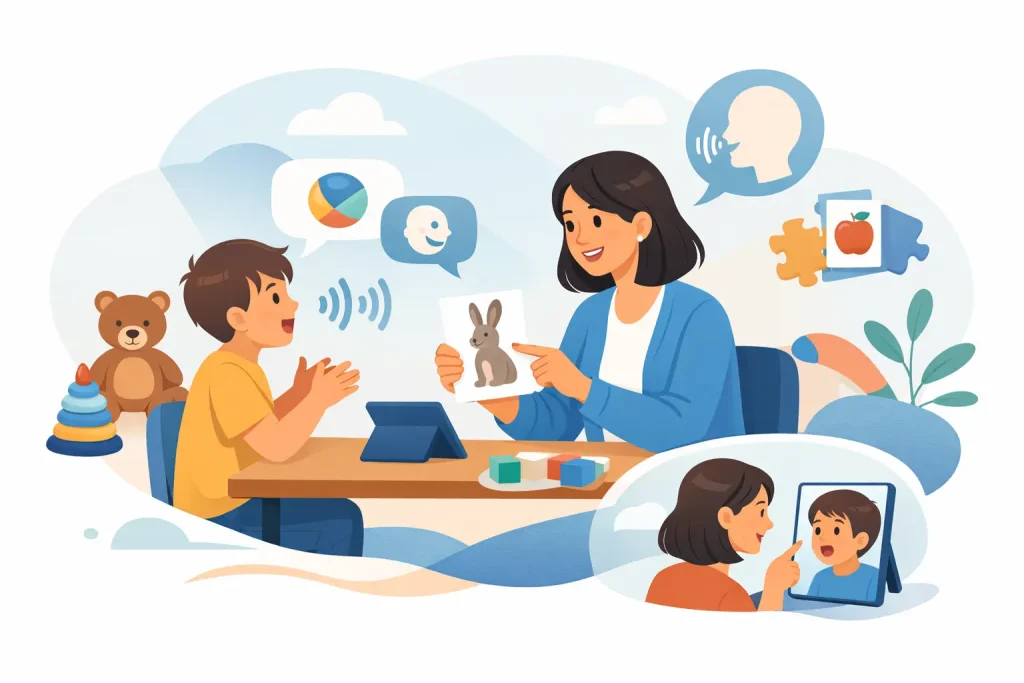
A child who points, pulls a parent toward what they need, or becomes upset when they cannot be understood is already trying to communicate. The best therapies for speech delay build on that effort. They do not simply ask a child to repeat words. They help the child understand language, express needs, connect with others, and feel successful communicating at home, school, and play.
Speech development does not follow one exact timetable, and a late talker does not always have a long-term language concern. Still, when speech is difficult to understand, words are not increasing, or frustration is becoming part of everyday life, an early professional assessment can bring clarity. The right therapy depends on why a child is delayed, how they communicate now, and what support the family can realistically provide between sessions.
Why an Assessment Comes Before Therapy
Speech delay is a description, not a diagnosis. A child may have difficulty producing certain sounds, understanding spoken language, using words and sentences, coordinating mouth movements, hearing clearly, or interacting socially. Each situation calls for a different treatment plan.
A speech-language pathologist starts by learning about the child’s health history, milestones, languages spoken at home, play skills, attention, and current ways of communicating. The assessment may include observation, parent questions, play-based tasks, and a review of how clearly the child understands and uses words. For young children, this should feel more like guided play than a test.
Hearing should also be checked when speech or language is delayed. Even mild or fluctuating hearing difficulties, including those connected with frequent ear infections, can affect how a child hears speech sounds. A therapist may recommend a hearing assessment or ask the family to speak with a pediatrician, ENT specialist, or developmental specialist when needed.
The goal is not to place a label on a child quickly. It is to understand the communication profile well enough to choose care that is useful, respectful, and measurable.
Best Therapies for Speech Delay: What May Help
Speech and Language Therapy
Speech and language therapy is often the main treatment for speech delay. A licensed speech-language pathologist uses activities matched to the child’s age and interests, such as toys, books, pictures, games, routines, and conversation. For a toddler, therapy may focus on gestures, first words, turn-taking, and requesting. For an older child, it may involve sentence building, following directions, vocabulary, storytelling, pronunciation, or social communication.
When the concern is speech sound production, therapy helps children hear, plan, and practice sounds correctly. When the concern is language, the therapist may work on understanding questions, combining words, using grammar, and communicating ideas. The pace matters. Pushing a child to perform before they are ready can create pressure, while well-timed practice creates small wins that add up.
Frequency varies. Some children benefit from weekly sessions plus daily home practice. Others need a more intensive period of support, particularly if speech is very difficult to understand or several areas of communication are affected. Progress is usually stronger when goals are specific, such as using two-word phrases during routines or producing a target sound accurately in familiar words.
Parent Coaching and Home-Based Practice
For young children, parents and caregivers are a central part of therapy. The most effective support often happens in the ordinary moments that repeat every day: getting dressed, eating breakfast, bath time, driving, reading, and putting toys away.
Parent coaching teaches adults how to pause and give a child time to respond, model short useful phrases, expand on what the child says, and create communication opportunities without turning the day into a lesson. If a child says car, for example, a parent might respond, red car or car go. The child hears a slightly more advanced model without being corrected or pressured.
Home-based speech therapy can be especially helpful for children who are more comfortable in familiar surroundings. It also allows the therapist to see real routines and coach caregivers in the moments where communication challenges actually occur. Your Choice Healthcare can provide speech therapy at home in Dubai, bringing personalized support into a setting where families can practice comfortably and consistently.
Play-Based and Early Intervention Therapy
Young children learn language through shared attention, imitation, movement, and play. Play-based therapy uses those natural learning channels rather than relying on worksheets or long periods of sitting still. A therapist may follow the child’s interest in blocks, animals, cars, bubbles, or pretend play, then use that activity to encourage words, gestures, choices, and back-and-forth interaction.
Early intervention is particularly valuable when delays are recognized in toddlerhood or preschool years. It can support communication before frustration, withdrawal, or behavior concerns become more established. Early support does not mean assuming the worst. It means giving a child practical tools while the brain is developing rapidly.
Occupational Therapy or Developmental Support
Speech therapy is sometimes only one part of the plan. If a child also struggles with feeding, sensory processing, fine motor skills, attention, daily routines, or play skills, occupational therapy or developmental support may be recommended. These services do not replace speech therapy, but they can address barriers that make communication harder.
For example, a child who becomes overwhelmed by sounds, textures, or transitions may find it difficult to participate in language activities. A coordinated care plan can help the child regulate, engage, and communicate more effectively. Families benefit when providers share goals and avoid treating each concern in isolation.
Augmentative and Alternative Communication
Some children need more support than spoken words alone can provide at first. Augmentative and alternative communication, often called AAC, may include gestures, picture boards, communication books, sign language, or speech-generating devices. AAC is not a last resort, and it does not prevent children from learning to speak.
For many children, giving them a reliable way to express choices, needs, and feelings reduces frustration and encourages interaction. The approach should be selected carefully by a trained clinician and used consistently by the people around the child. A picture for water, for instance, becomes meaningful when caregivers respond to it every time.
Choosing the Right Therapist and Setting
The best provider is not simply the one with the shortest appointment time. Look for a qualified speech-language pathologist who explains the assessment clearly, sets practical goals, and shows families how to help between sessions. Therapy should feel supportive and purposeful, not confusing or overly rigid.
Ask how progress will be tracked. A good plan identifies what the child can do now, what they are working toward, and how the approach may change if progress slows. It should also account for the child’s age, temperament, attention span, and home language.
For multilingual families, using more than one language does not cause speech delay. Children may distribute words across languages or take time to build vocabulary in each one, but they benefit from rich, natural communication with the people closest to them. Families should not feel pressured to stop speaking the language that allows them to connect most warmly and confidently with their child.
Clinic-based therapy may suit children who respond well to a structured environment and specialized materials. At-home therapy can be a better fit for families managing busy schedules, siblings, transportation challenges, or a child who communicates more freely at home. Neither setting is automatically better. Consistency, clinician expertise, and family involvement usually matter more.
When to Seek Help Promptly
It is wise to speak with a pediatrician or speech-language pathologist if a child loses words or social skills they previously had, does not respond consistently to sounds or their name, has difficulty eating or swallowing, or becomes highly distressed by communication challenges. Families should also seek guidance when speech is frequently hard for familiar adults to understand, language is not progressing over time, or there are concerns about development beyond speech.
Avoid waiting only because someone says a child will grow out of it. Some children do catch up, but an evaluation can distinguish watchful waiting from a situation where early support would make daily life easier. Starting therapy does not commit a family to a long course of treatment. It gives them informed options.
A child does not need perfect pronunciation to be heard, understood, and included. With timely assessment, skilled therapy, and calm practice woven into family life, communication can become less of a struggle and more of a source of confidence.