The first days and weeks after a stroke can make ordinary tasks feel unfamiliar. Sitting up, standing from a chair, using one hand, or walking across a room may require new effort and careful support. Home physiotherapy after stroke gives patients a structured way to rebuild these abilities in the comfort of their own surroundings, with treatment shaped around the movements that matter most in daily life.
Recovery is rarely a straight line. Some people regain movement quickly, while others need gradual, sustained rehabilitation over many months. A qualified physiotherapist can help create a safe plan that respects the patient’s medical condition, current stamina, and personal goals while giving families clear guidance on how to support progress.
What Stroke Physiotherapy at Home Can Address
A stroke can affect strength, balance, coordination, sensation, speech, attention, and confidence. The effects vary depending on the area of the brain involved, which is why rehabilitation should never follow a one-size-fits-all routine.
Home physiotherapy commonly focuses on improving mobility and reducing the risks that can arise when movement is limited. This may include helping a patient move safely in bed, transfer from bed to chair, improve posture, strengthen a weaker side, practice walking, and build balance for everyday activities. For some patients, treatment also includes upper-limb rehabilitation to make dressing, eating, grooming, and reaching easier.
The home setting gives the physiotherapist useful context. Rather than practicing in a generic room, the patient can work on the actual chair they use, the bathroom route they need to navigate, or the doorway that feels difficult to manage. This makes rehabilitation practical, relevant, and easier to carry into the rest of the day.
Starting Home Physiotherapy After Stroke Safely
Before beginning an exercise program, the patient should be medically stable and have appropriate clearance from their treating physician. This matters especially after a recent hospital discharge, surgery, a fall, uncontrolled blood pressure, or a new medical concern.
A professional assessment should come first. The physiotherapist will typically review the stroke history, current medications, mobility level, pain, muscle tone, fall risk, and any equipment already being used. They may also assess whether the patient needs support from other services, such as a doctor at home, nursing care, occupational therapy, or speech therapy.
The first visit should set realistic goals
Good rehabilitation begins with goals that are meaningful to the patient. For one person, the priority may be walking safely to the bathroom. For another, it may be climbing a few steps, preparing a simple meal, or gaining enough arm control to hold a cup.
Goals should be specific and achievable in the short term. “Walk from the bedroom to the living room with assistance” is more useful than simply “walk better.” Clear goals help the therapist measure change and help the family recognize progress that may otherwise feel too gradual.
Safety comes before repetition
After a stroke, doing more is not always better. Exercising through severe pain, marked exhaustion, dizziness, chest discomfort, or new weakness can be unsafe. The right program balances repetition with recovery and changes as the patient becomes stronger.
A physiotherapist may recommend simple adjustments at home before increasing activity. Removing loose rugs, improving lighting, keeping frequently used items within reach, and using appropriate footwear can reduce fall risk. If a walker, cane, wheelchair, transfer aid, or bathroom support is needed, it should be selected and used under professional guidance.
A Personalized Plan for Everyday Movement
A home program usually combines therapist-led sessions with carefully chosen daily practice. The exact exercises depend on the patient’s condition. Someone with very limited movement may begin with positioning, supported sitting, and assisted range-of-motion work. A patient who is already walking may focus more on gait quality, balance, endurance, and safely managing obstacles.
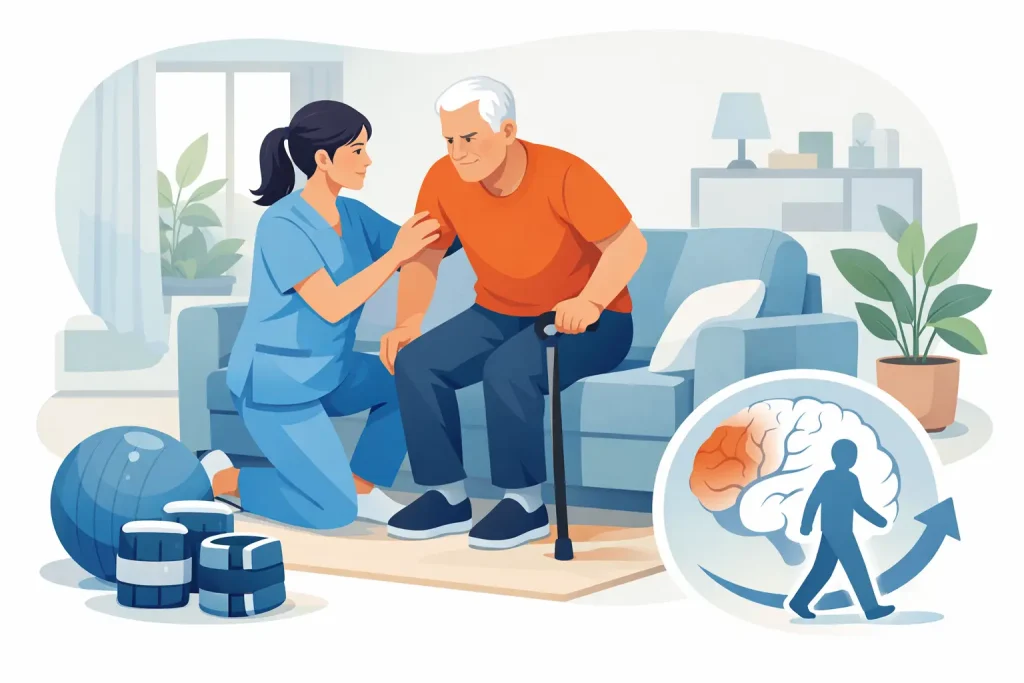
Treatment may include bed mobility practice, sit-to-stand training, supported weight shifting, stepping exercises, walking drills, gentle strengthening, and functional arm activities. The purpose is not simply to complete a list of exercises. It is to help the brain and body practice useful movement patterns repeatedly and safely.
Consistency has real value, but the schedule should fit the patient. Short sessions performed regularly may be more productive than occasional long sessions that cause fatigue. A therapist can advise how often to practice, what level of assistance is required, and which activities should not be attempted alone.
Progress should be reviewed regularly. If a movement becomes easier, the plan can be advanced. If pain, fear, fatigue, spasticity, or poor balance limits progress, the therapist can adapt the approach rather than pushing through the problem.
How Families Can Help Without Taking Over
Family support can make home rehabilitation feel less overwhelming, but it works best when it promotes independence. It can be tempting to do every task for a loved one because it is faster or seems safer. Yet, when appropriate, allowing the patient time to participate in dressing, transfers, or simple household activities can support confidence and function.
Caregivers should follow the physiotherapist’s instructions for assisting with movement. Incorrect lifting or pulling can injure both the patient and caregiver, particularly around a weak shoulder. A therapist can demonstrate safe ways to help with standing, turning, walking, and repositioning.
Encouragement also matters. Recovery can be frustrating when improvement is slow or when the patient compares their current abilities with life before the stroke. Focus on practical gains: needing less help to stand, walking a few more steps, sitting with better control, or completing a task with greater confidence.
It is equally important to watch for warning signs. Seek urgent medical attention for sudden facial drooping, new arm or leg weakness, slurred speech, severe headache, confusion, chest pain, fainting, breathing difficulty, or a sudden major change in function. These symptoms should not be treated as a normal part of rehabilitation.
The Benefits of Rehabilitation in a Familiar Setting
Traveling to a clinic can be exhausting for someone recovering from stroke, particularly when mobility is limited or transport requires considerable assistance. At-home care reduces that burden and allows the patient to receive focused attention without leaving a familiar environment.
For families in Dubai, home visits can also make care coordination easier. The physiotherapist can see the challenges the patient faces firsthand, explain the plan directly to relatives, and adapt recommendations to the available space and support system. This can be especially valuable for elderly patients or those returning home after an extended hospital stay.
Home care does have limits. Some patients may need hospital-based rehabilitation, specialist testing, advanced equipment, or a multidisciplinary program that cannot be fully delivered at home. In many cases, home physiotherapy works best as part of a wider recovery plan coordinated with the patient’s physician and other healthcare professionals.
Choosing the Right Home Physiotherapist
The clinician’s qualifications and communication style matter as much as convenience. Look for a licensed, experienced physiotherapist who understands neurological rehabilitation and takes time to assess the patient rather than beginning with a generic exercise routine.
The therapist should explain the goals of treatment in plain language, demonstrate safe techniques, document progress, and communicate when the care plan needs to change. Families should also feel comfortable asking questions about fall prevention, fatigue, pain, equipment, and realistic recovery expectations.
Your Choice Healthcare provides professional home physiotherapy in Dubai with care tailored to the patient’s mobility needs and recovery goals. Scheduling therapy at home can help patients continue rehabilitation with greater comfort, consistency, and family involvement.
A stroke changes the pace of life, but it does not erase the possibility of meaningful progress. With skilled guidance, a safe home environment, and patient daily practice, each small movement can become a step toward greater independence.