A blood test may take only a few minutes, but getting to a clinic can take much longer. For a parent managing a sick child, an adult recovering from surgery, an elderly patient with limited mobility, or a professional with a full schedule, the trip itself can become the hardest part. That is why mobile blood tests versus clinics is not simply a question of convenience. It is a decision about timing, comfort, clinical needs, and the type of support your household needs that day.
Both options can play a valuable role in your healthcare. A clinic remains the right setting for some assessments, especially when you need an in-person examination or immediate medical intervention. At-home blood collection, however, can make routine and follow-up testing far more manageable when travel is difficult or unnecessary.
Mobile Blood Tests Versus Clinics: The Main Difference
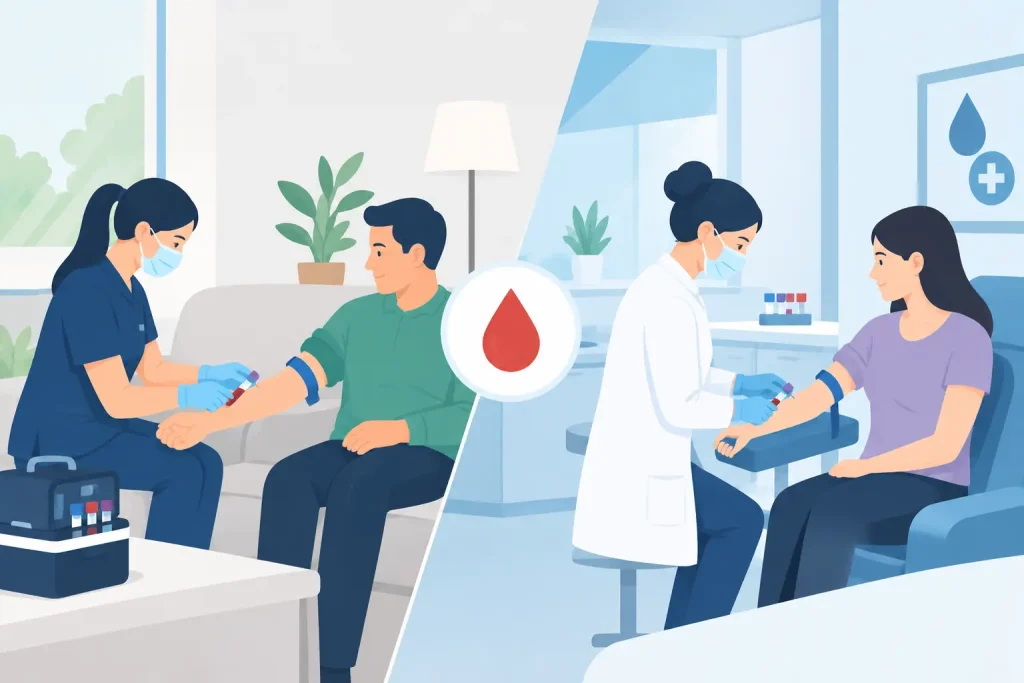
With a mobile blood test, a qualified healthcare professional visits your home, hotel, or workplace to collect the required sample. The sample is labeled, handled, and sent to a laboratory for processing. You avoid travel, waiting areas, parking, and the challenge of coordinating care for children or dependent relatives while attending an appointment.
At a clinic, blood collection happens in a dedicated medical environment. This can be useful when your doctor wants to assess you before ordering tests, when several services are needed at once, or when symptoms may require a more immediate clinical evaluation.
The quality of the result should not be judged by location alone. What matters is whether the sample is collected correctly, stored appropriately, transported promptly, and processed by a reliable laboratory. A professional mobile service should follow the same careful standards for identity checks, labeling, infection control, and sample handling that patients expect in a clinical setting.
When At-Home Blood Testing Makes Sense
Home blood collection is often a practical choice for routine screening, doctor-requested panels, medication monitoring, and follow-up testing. It can be particularly helpful when leaving home would add stress without improving the care you receive.
For older adults, mobility challenges can turn a simple lab visit into an exhausting outing. A home appointment allows them to remain in familiar surroundings, with a family member nearby if needed. This can reduce anxiety and make regular monitoring easier to maintain.
Parents may also prefer at-home testing for children who are unwell, anxious, or difficult to manage in a crowded waiting room. A calm home environment does not remove the discomfort of a blood draw, but it can make the overall experience more reassuring for both the child and parent.
People recovering after surgery or illness often need repeat tests to monitor healing, infection markers, or medication effects. If their physician has already determined what testing is needed, mobile collection can prevent unnecessary strain during recovery. The same applies to busy professionals who need preventive health screening but cannot easily take several hours away from work.
At-home testing may be especially useful when you need:
- Routine health checks, including cholesterol, blood sugar, vitamin, thyroid, or wellness panels
- Follow-up tests ordered by a physician
- Regular monitoring for a chronic condition
- Blood work during post-treatment or post-surgery recovery
- Testing for an elderly relative, newborn, or child when travel is challenging
Convenience should never mean rushing. A good provider explains any preparation requirements, confirms the requested tests, and gives you clear instructions before the visit. For example, some tests require fasting, while others may need to be taken at a particular time in relation to medication. Those details affect accuracy more than whether the sample is collected at home or in a clinic.
Comfort and privacy matter
A home visit gives patients more control over the setting. You can sit comfortably, lie down if you are prone to dizziness, and have a trusted family member present. For people who feel anxious around needles or clinical spaces, that familiarity can make a meaningful difference.
Privacy is another consideration. Some patients simply prefer not to discuss health concerns in a busy reception area or arrange a clinic visit around a sensitive test. Home collection can offer a more discreet option while still keeping the process professional.
When a Clinic Is the Better Choice
Mobile services are not a replacement for every medical need. If you have new, severe, or worsening symptoms, you may need an in-person medical assessment rather than a blood test alone. Chest pain, trouble breathing, fainting, severe dehydration, sudden confusion, uncontrolled bleeding, or signs of a serious allergic reaction require urgent medical attention. Do not wait for a home laboratory visit in an emergency.
A clinic can also be more appropriate when your physician needs to examine you, review symptoms in person, perform imaging, administer treatment, or collect samples that require specialized equipment. Some tests have strict handling requirements or must be processed immediately. In those cases, the clinic or hospital laboratory may be the safer and more suitable route.
There is also value in having multiple services available in one place. If you need blood work, an electrocardiogram, a consultation, and a procedure on the same day, a clinic may reduce the number of separate appointments. The best choice depends on the specific test, your health status, and your doctor’s instructions.
How to Choose a Safe Mobile Blood Test Service
The decision should not be based on speed alone. Before booking, ask who will collect the sample and how the provider protects quality from the moment of collection to laboratory delivery.
Look for qualified, licensed healthcare professionals with experience in venipuncture and patient care. They should use sterile, single-use equipment and follow appropriate infection-control procedures. The collector should verify your identity, confirm the ordered tests, label samples in your presence, and explain what will happen next.
It is also reasonable to ask how samples are transported and which laboratory will process them. Proper timing and temperature control are essential for certain tests. Clear communication matters as well: you should know whether you need to fast, drink water, pause a supplement only if your doctor advises it, or schedule the visit at a specific time.
Your Choice Healthcare brings trained healthcare professionals to patients across Dubai for home lab testing and wider medical support. This can be particularly helpful when blood work is part of an ongoing care plan that also involves a doctor visit, nursing support, rehabilitation, or elderly care at home.
Consider the total cost of the appointment
Comparing prices is sensible, but compare the full experience rather than the collection fee alone. A clinic visit may involve transport, parking, time away from work, and arranging childcare or support for an elderly family member. A home visit may include a call-out charge, but it can reduce those indirect costs and save considerable time.
Insurance coverage can vary depending on the test, provider, and policy. Confirm payment and reimbursement details before the appointment, especially for specialized panels or tests requested as part of ongoing treatment.
Preparing for Accurate Results at Home
Once you choose home collection, preparation is straightforward but important. Follow the instructions for your exact test rather than relying on general advice. If fasting is required, ask whether water is allowed and how long you should avoid food. Tell the healthcare professional about prescription medicines, supplements, recent illness, pregnancy, and any history of fainting during blood draws.
On the day, drink water unless you have been told otherwise. Good hydration can make veins easier to access. Wear clothing with sleeves that can be rolled up comfortably, and choose a clean, well-lit space where you can sit or lie down. If you are arranging testing for a child or older adult, keep their identification and medical request available.
After collection, follow any instructions about applying pressure to the site, removing the bandage, and watching for unusual bruising or continued bleeding. Mild soreness can happen, but significant pain, swelling, or ongoing bleeding should be discussed with a healthcare professional.
The Best Option Is the One That Supports Your Care
For routine, planned, or follow-up testing, mobile collection can remove barriers that cause people to delay important blood work. It brings professional care closer to families who are busy, recovering, caring for loved ones, or simply trying to protect their time and comfort.
For complex symptoms, specialized testing, or situations that require examination and treatment, a clinic may still be the right place to be. The most helpful choice is not always the closest option. It is the one that gives you safe sample collection, clear medical guidance, and the right level of care when you need it.