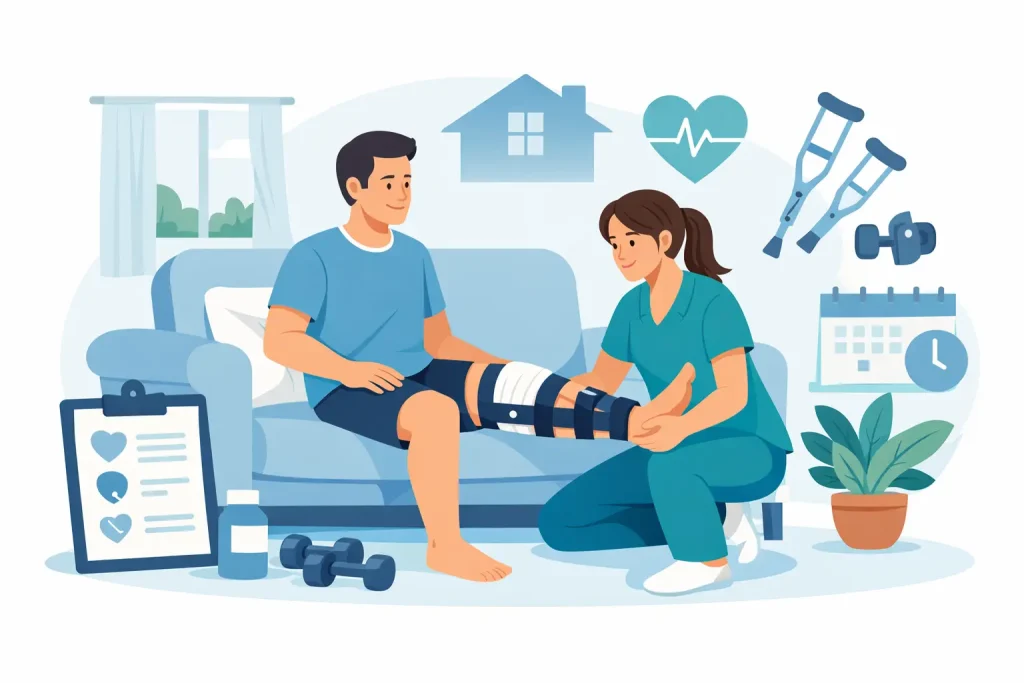
The first few days at home after surgery can feel more demanding than the hospital stay. You may be managing pain, fatigue, movement restrictions, medications, and the practical challenge of getting around safely. Home physiotherapy after surgery brings structured rehabilitation to the place where those everyday movements actually happen – your bedroom, bathroom, stairs, and living area.
For many patients in Dubai, the benefit is not simply avoiding a trip to a clinic. It is receiving professional, personalized support while rebuilding confidence in a familiar setting. A qualified physiotherapist can assess how you move, follow the surgeon’s instructions, and create a program that progresses at a pace appropriate for your procedure and current condition.
Why early rehabilitation needs professional guidance
Surgery is designed to treat a medical problem, but recovery depends on what happens afterward. Muscles may weaken during rest, joints can become stiff, and swelling or discomfort may make normal activities feel difficult. Without the right approach, some patients begin moving too little because they are afraid of pain, while others try to do too much before their body is ready.
Physiotherapy helps find the middle ground. The goal is usually to restore safe movement, improve strength and circulation, reduce stiffness, and support a gradual return to daily tasks. The exact plan depends on the surgery, your age, medical history, mobility before surgery, and your surgeon’s post-operative guidance.
A patient recovering from knee replacement surgery, for example, may need help improving knee bend, walking mechanics, and leg strength. Someone recovering from abdominal surgery may first need guidance on breathing exercises, getting out of bed safely, posture, and gentle mobility. After shoulder surgery, the focus may be on protecting the repair while restoring movement only when the surgeon permits it.
This is why generic online exercise routines are not a substitute for an individual assessment. An exercise that is appropriate after one procedure may be unsuitable after another.
What happens during home physiotherapy after surgery
Your first appointment should begin with a careful review, not a rush into exercise. The physiotherapist will ask about your surgery, discharge instructions, current symptoms, medications, mobility level, and any restrictions given by your surgeon. They may check your posture, range of motion, strength, balance, walking pattern, and ability to complete essential tasks safely.
At home, that assessment becomes especially practical. Rather than evaluating walking only along a flat clinic hallway, the physiotherapist can see whether you need support getting in and out of bed, using the bathroom, standing from your usual chair, or navigating steps. This makes the advice more relevant to your actual routine.
A treatment session may include gentle mobility exercises, guided walking, muscle activation, stretching where appropriate, balance training, breathing exercises, and education for family members or caregivers. Hands-on techniques may also be used when clinically suitable. The physiotherapist will show you how to perform your prescribed exercises correctly and explain how often to do them between visits.
Progress is not always linear. Some days you may feel stronger, while other days pain, swelling, poor sleep, or fatigue may slow you down. A physiotherapist adjusts the program based on how your body is responding rather than pushing through symptoms without a plan.
Recovery goals change as you improve
In the early stage, goals are often simple and essential: moving safely in bed, standing with support, improving circulation, and taking short walks as advised. As recovery progresses, treatment may focus more on strength, endurance, balance, joint mobility, and returning to activities such as driving, work, exercise, or caring for family.
The right pace matters. Too little movement can contribute to stiffness and loss of strength, while overdoing activity can increase pain or swelling and delay progress. Your physiotherapist can help you recognize the difference between expected exercise discomfort and symptoms that need medical attention.
When care at home can be especially helpful
Home-based rehabilitation is often a practical choice after orthopedic procedures, joint replacement, fracture repair, spinal surgery, abdominal surgery, or periods of hospitalization that have reduced mobility. It can also be valuable for older adults, patients who need help with transport, and families coordinating care for a loved one.
The home setting offers comfort, privacy, and less physical strain during a time when traveling may be difficult. It also allows caregivers to take part in the process. A spouse, adult child, or home nurse can learn safe ways to assist with transfers, walking support, exercise reminders, and fall prevention.
That said, home physiotherapy is not the best option in every situation. Some patients later benefit from clinic-based rehabilitation because of specialized equipment, access to a larger gym space, or a need for more intensive supervised training. Others may need hospital assessment first if they are medically unstable. Good care is about choosing the setting that suits the stage of recovery, not forcing one approach for everyone.
How to prepare for a productive visit
You do not need a home gym to begin rehabilitation. Wear comfortable clothing that allows movement, keep your discharge paperwork available, and make sure the physiotherapist has enough clear space to assess walking or complete exercises safely. If you use a walker, crutches, brace, or other mobility aid, have it nearby.
It also helps to write down questions before the appointment. Patients commonly want to know how much walking is safe, whether swelling is expected, how to use stairs, when they can sleep in a certain position, or how to manage exercises around pain medication. Clear questions lead to clearer guidance.
If a family member is helping with your recovery, ask them to attend part of the session. They can learn practical details that are easy to forget when you are tired or uncomfortable, including how to set up the home to reduce trip hazards and how to support movement without pulling or straining you.
Signs that should not wait for a routine therapy visit
Physiotherapy supports recovery, but it does not replace urgent medical assessment. Contact your surgeon or seek urgent medical care if you develop chest pain, trouble breathing, fainting, sudden confusion, uncontrolled bleeding, a high fever, rapidly worsening pain, new severe swelling, or unusual redness, drainage, or odor around the surgical wound.
New calf pain or one-sided leg swelling also needs prompt medical advice, particularly after surgery. Do not try to exercise through symptoms that feel sudden, severe, or significantly different from what your medical team described as expected.
Your physiotherapist should work within your medical plan and communicate concerns appropriately. Safe rehabilitation means knowing when to progress and when to pause.
Building confidence one movement at a time
Recovery can feel frustrating when ordinary tasks require planning. A physiotherapy plan turns those tasks into meaningful milestones: standing up with less assistance, walking farther without fear, reaching the bathroom safely at night, or climbing a few steps with better control.
Consistency matters more than dramatic effort. Completing the prescribed exercises carefully, resting when advised, attending follow-up sessions, and sharing honest feedback about pain or difficulty can all shape your progress. Small gains often add up faster when they are repeated every day.
For patients and families in Dubai, Your Choice Healthcare can arrange home physiotherapy with experienced professionals who provide individualized support in the comfort of home. The care plan should always reflect your surgical instructions, your goals, and the level of support you need now.
The best next step after surgery is often a simple one: ask for help before uncertainty turns into inactivity. With the right clinical guidance, your home can become a safer place to recover, practice, and move forward.