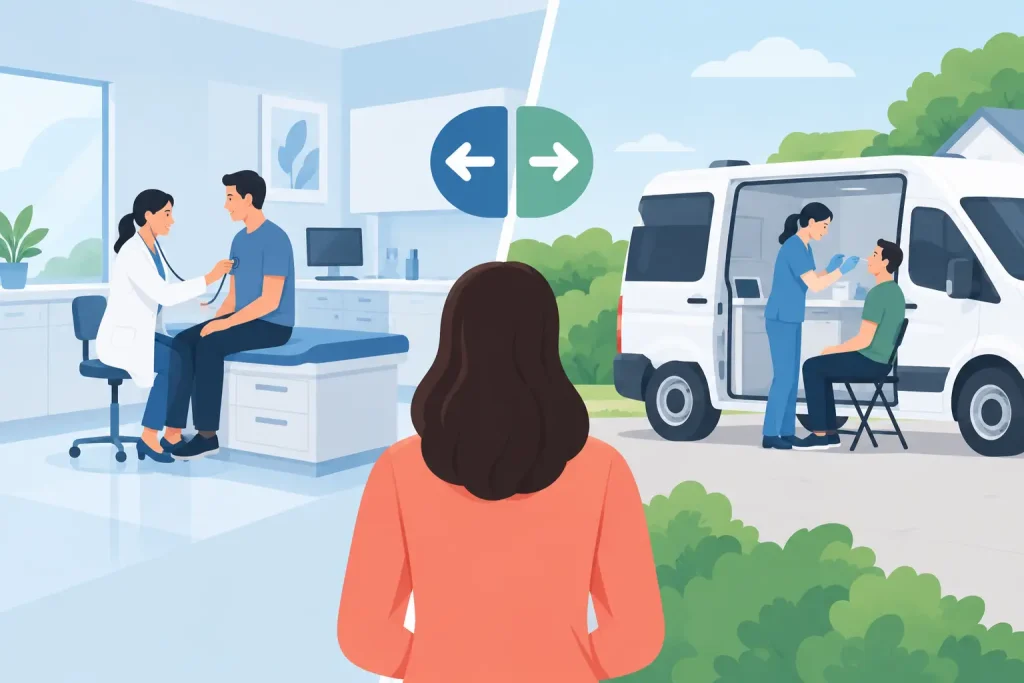
A blood test should not require a stressful morning of traffic, parking, crowded waiting rooms, and rearranged work or school plans. When comparing clinic versus mobile diagnostics, the best choice is not always the nearest location. It is the option that gets the right test done safely, accurately, and at a time that works for the patient.
For families in Dubai, mobile diagnostic services can make routine and follow-up testing far easier. A trained healthcare professional visits your home, collects the required sample using proper clinical procedures, and ensures it is handled for laboratory processing. Still, a clinic remains the better setting for some tests and situations. Knowing the difference helps you make a confident decision.
Clinic Versus Mobile Diagnostics: The Key Difference
A clinic-based diagnostic visit requires the patient to travel to a medical facility for sample collection, screening, or testing. It can be a good choice when the test needs specialized equipment, immediate physician assessment, imaging, or a controlled clinical environment.
Mobile diagnostics brings selected testing services to the patient. Depending on the service ordered, a licensed healthcare professional can collect blood, urine, swab, or other samples at home, at an office, or in a hotel. The samples are labeled, stored, and transported according to clinical requirements before being processed by a laboratory.
The difference is not simply home versus clinic. It is about the type of test, the patient’s condition, the urgency of results, and whether a facility-based assessment is needed alongside the diagnostic work.
When Mobile Diagnostics Is the Better Choice
At-home diagnostics are especially useful when travel creates an unnecessary burden. A parent managing a sick child may not want to spend hours in a waiting area. An older adult with limited mobility may find a clinic visit exhausting. A patient recovering from surgery may need regular blood work while conserving energy for healing.
Mobile testing also suits busy professionals who need preventive screening but cannot step away from work during clinic hours. Instead of postponing testing for weeks, they can arrange sample collection around their schedule. This is often valuable for routine wellness panels, vitamin checks, diabetes monitoring, cholesterol tests, thyroid testing, and follow-up laboratory work ordered by a physician.
Comfort matters as well. Some patients feel calmer giving a blood sample in familiar surroundings, particularly children, people with anxiety around medical settings, or individuals who need support from a family member. A quiet home environment can make the experience more manageable without lowering the standard of care.
For households with several family members needing tests, mobile diagnostics can also reduce the practical strain of coordinating multiple appointments. One home visit may be more sensible than several trips across the city.
The value of professional collection at home
Convenience should never mean cutting corners. A proper home diagnostic service relies on qualified clinicians who follow hygiene, identification, labeling, and sample-handling protocols. The collector should confirm the patient’s details, explain any preparation requirements, use appropriate equipment, and document the collection correctly.
Preparation remains important regardless of location. Some blood tests require fasting, specific timing, or temporary changes to supplements or medications. A home visit may be more convenient, but patients should still follow instructions from their doctor or healthcare provider. If anything is unclear, ask before the appointment rather than risking an inaccurate or delayed result.
When a Clinic Is the Better Choice
Mobile diagnostics does not replace every clinic visit. A clinic is often the right setting when a patient needs imaging such as X-rays, ultrasound, CT scans, or MRI scans. It is also more suitable for tests requiring specialized equipment, immediate observation, or procedures that cannot safely be performed at home.
If symptoms are severe or rapidly worsening, do not wait for a routine home collection appointment. Chest pain, trouble breathing, fainting, signs of stroke, uncontrolled bleeding, severe allergic reactions, or sudden confusion require emergency care. In these situations, immediate assessment is more important than convenience.
A clinic may also be preferable when a doctor needs to examine the patient and make treatment decisions during the same visit. For example, a person with persistent high fever, significant dehydration, severe abdominal pain, or a concerning infection may need a physical examination, vital-sign monitoring, and treatment in addition to laboratory tests.
There is also a practical issue: not every mobile provider offers every test. Before booking, confirm whether the required test can be collected at home, whether the patient needs to fast, and how quickly results are expected. Clear answers prevent avoidable delays.
Is One Option More Accurate Than the Other?
The location of sample collection does not automatically determine accuracy. When samples are collected by trained professionals, prepared properly, and transported under the required conditions, home-collected diagnostic samples can provide reliable laboratory results.
Accuracy depends more on the full process: correct patient identification, proper collection technique, appropriate containers, timing, temperature control where needed, and timely delivery to the laboratory. The laboratory’s quality standards and the interpretation of results by a qualified clinician matter too.
That said, certain tests are more sensitive to handling conditions or require immediate processing. Those may be better done at a clinic or laboratory collection center. A dependable provider will tell you when home collection is appropriate and when it is not. That honesty is a sign of patient-first care.
Cost, Time, and Comfort: What Should You Prioritize?
A clinic test may appear less expensive at first because there is no travel fee for the healthcare professional. But the real cost can include transportation, parking, time away from work, childcare arrangements, and the difficulty of bringing an elderly or unwell family member to a facility.
Mobile diagnostics may include a home-visit fee, but it can offer better value when it saves a long trip or prevents a patient from missing work, rest, or recovery time. For a family arranging several services at once, the convenience can be significant.
Results turnaround is another factor. Some routine tests have similar processing times whether collected at home or at a clinic because the same laboratory performs the analysis. Other tests may be processed faster in a facility if they need immediate handling. Ask about expected reporting time before booking, particularly if your doctor is waiting to make a treatment decision.
How to Choose the Right Diagnostic Option
Start with the test itself. If it is a routine lab test that can be safely collected at home, mobile diagnostics may be the most comfortable and efficient choice. If you need imaging, an urgent medical evaluation, or specialized testing equipment, a clinic is likely more appropriate.
Then consider the patient. Home collection is often a strong fit for seniors, young children, new mothers, people with limited mobility, post-treatment patients, and anyone managing a demanding schedule. A clinic can be preferable for patients who need direct access to broader medical services at the same time.
Finally, choose a provider that treats diagnostics as part of care, not just a transaction. Look for trained, certified professionals, clear instructions, careful sample handling, and straightforward communication about what happens next. At Your Choice Healthcare, mobile diagnostic support is designed to bring clinically supervised care to the doorstep while respecting the limits of what should be handled in a clinic or emergency setting.
The right choice should leave the patient feeling cared for, not inconvenienced. If a test can be completed safely at home, arrange it around your family’s needs and use the time saved to focus on recovery, work, or the people who matter most.