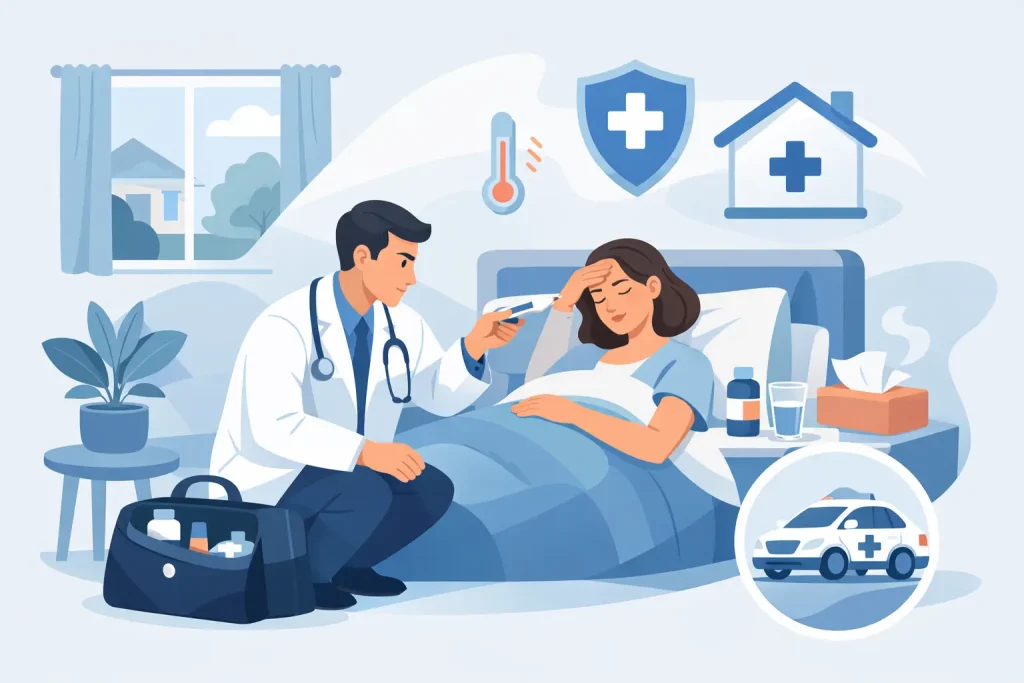
A fever can turn a normal evening into a stressful one quickly, especially when a child feels unusually sleepy, an elderly parent is weak, or symptoms appear after hours. A doctor visit at home for fever gives your family access to professional medical assessment without the added strain of traveling to a clinic while someone is unwell.
For many fevers, rest, fluids, and monitoring may be enough. But fever is a symptom, not a diagnosis. The right next step depends on the patient’s age, temperature, medical history, duration of symptoms, and any accompanying warning signs. An experienced physician can assess those details in the comfort of your home and advise whether home treatment, testing, medication, or urgent hospital care is appropriate.
Why Fever Deserves Careful Assessment
Fever is the body’s response to an underlying condition, commonly a viral or bacterial infection. It can occur with respiratory infections, stomach infections, urinary tract infections, tonsillitis, influenza, COVID-19, and many other illnesses. A thermometer reading alone does not tell the whole story.
A temperature that is manageable for one healthy adult may need faster evaluation in a newborn, a young child, a pregnant person, an older adult, or someone with reduced immunity. The person’s behavior and overall condition matter just as much as the number. Are they drinking fluids? Are they alert and breathing comfortably? Is there persistent pain, a rash, or worsening weakness? These are the questions a physician considers during an in-home consultation.
A home visit can also be a practical choice when the patient is too tired to travel, when parents want to avoid exposing siblings to a crowded waiting room, or when an elderly family member needs familiar surroundings and support.
What Happens During a Doctor Visit at Home for Fever
A professional home consultation is designed to be thorough, calm, and focused on the individual patient. The physician begins by discussing when the fever started, how it has changed, recent illnesses or travel, current medications, allergies, and relevant medical conditions.
The clinical examination may include checking temperature, pulse, blood pressure, oxygen level, hydration, throat, ears, chest, abdomen, skin, and neurological responsiveness as needed. For children, the doctor will also consider feeding, wet diapers or urination, activity level, sleep, and comfort.
Based on the findings, the physician may recommend supportive care at home, prescribe appropriate treatment when clinically indicated, or arrange further investigation. Depending on the patient’s needs, this may include lab testing at home or a clear referral to an emergency department or specialist. Good care is not about treating every fever with antibiotics. It is about identifying the likely cause, managing symptoms safely, and recognizing when more urgent intervention is needed.
When Home Care May Be Appropriate
Many patients with a mild fever can be assessed and managed at home when they are stable, able to take fluids, and do not have serious warning signs. This is often the case with uncomplicated viral symptoms such as a runny nose, mild cough, sore throat, body aches, or short-term stomach upset.
The physician may advise rest, regular fluids, light meals as tolerated, and fever medication that is suitable for the patient’s age, weight, health conditions, and current medicines. Never give medication to a child based only on an adult dose or another child’s prescription. Avoid combining products with the same active ingredients, particularly cold and flu medicines.
Keep the room comfortably cool rather than overly cold, and dress the patient in light clothing. Ice baths and alcohol rubs are not recommended, as they can cause discomfort and may be unsafe. The goal is not always to bring the temperature to a perfectly normal number. It is to help the person stay comfortable, hydrated, and closely observed while the underlying illness is evaluated.
Signs You Should Seek Emergency Care Instead
A home doctor can help with many urgent but non-emergency situations. However, some symptoms require immediate emergency assessment. Call emergency services or go to the nearest emergency department if fever occurs with any of the following:
- Trouble breathing, blue or gray lips, chest pain, or severe wheezing
- Confusion, fainting, seizures, severe drowsiness, or difficulty waking the patient
- A stiff neck, severe headache, persistent vomiting, or a rapidly spreading rash
- Signs of serious dehydration, including very little urination, dry mouth, no tears in a child, or inability to keep fluids down
- Fever in an infant younger than 3 months, or a patient who appears seriously ill at any age
Trust your instincts. If someone’s condition is worsening rapidly or feels alarming, do not wait for a routine appointment. Emergency care is the safest option.
Fever in Children: What Parents Should Watch
Children often develop fevers with common infections, and the temperature can rise quickly. This can be frightening, but a higher reading does not always mean a more severe illness. A child’s breathing, alertness, hydration, skin color, and ability to interact are all essential indicators.
Parents should monitor whether the child is drinking, urinating normally, responding to comfort, and becoming more or less active over time. For babies and toddlers, changes in feeding, crying, or sleep can provide valuable clues. A physician visiting at home can examine the child in a familiar environment, answer questions clearly, and help parents understand what to monitor through the night.
Do not delay medical assessment for a very young infant with fever. Infants younger than 3 months require prompt evaluation because infections can become serious quickly, even when early symptoms seem mild.
Fever in Older Adults and People With Chronic Conditions
For seniors and people managing diabetes, heart disease, kidney disease, lung disease, cancer treatment, or immune suppression, fever should be assessed with extra care. These patients may become dehydrated or weak more quickly, and their symptoms may not follow the usual pattern.
An older adult with a mild temperature but sudden confusion, reduced appetite, a fall, unusual sleepiness, or new urinary symptoms may need same-day medical evaluation. A doctor at home can reduce the difficulty of transporting a frail patient while providing a clinical assessment and a practical care plan for the family.
Preparing for the Home Visit
A few details can help the consultation run efficiently. Have the patient’s identification, medical history, medication list, known allergies, and recent test results available if possible. Record temperature readings and the time they were taken. If the patient has received fever medicine, note the name, dose, and time of the last dose.
For children, share their current weight, fluid intake, urination, and any changes in behavior. For adults, mention recent surgery, chronic conditions, new medications, travel, exposure to sick contacts, or recent antibiotics. These details help the physician make a more informed decision from the start.
Your Choice Healthcare provides doctor-on-call services in Dubai for families who need timely, personalized support at home. A DHA-certified physician can assess fever symptoms, guide safe next steps, and help coordinate additional home services when they are clinically appropriate. Availability and response times can vary by location and demand, so it is best to request care as soon as you are concerned.
A Calmer Way to Respond When Someone Has a Fever
The most helpful first step is to look beyond the thermometer. Notice how the patient is breathing, drinking, responding, and changing over time. Then choose the level of care that fits the situation: careful home monitoring for mild symptoms, an in-home doctor assessment when medical guidance is needed, or emergency care for serious warning signs.
Prompt, compassionate attention can replace uncertainty with a clear plan. When fever makes leaving home difficult, professional care at your doorstep can help your family make the next decision with greater confidence.