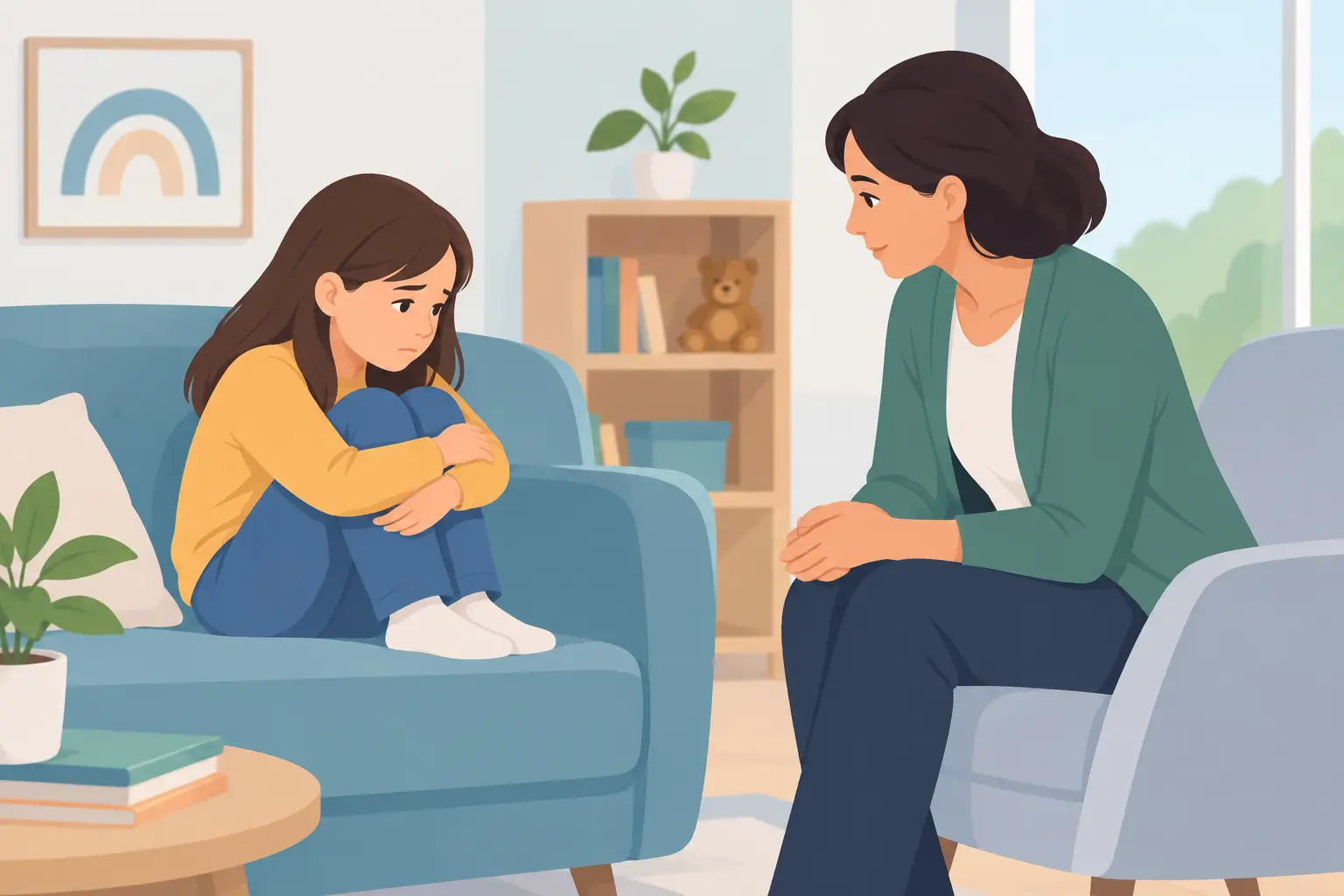
A child who says fewer words than peers, is hard for family members to understand, or becomes frustrated when trying to communicate deserves careful attention, not assumptions. This guide to pediatric speech assessment helps parents understand what happens during an evaluation, what the findings can mean, and how early, personalized support can make communication feel easier at home.
Speech and language development does not follow one exact timetable. Children grow up hearing different languages, have different personalities, and develop skills at different rates. Still, a professional assessment can clarify whether a child is simply developing at their own pace or would benefit from speech therapy.
When should a child have a speech assessment?
Parents often notice the first signs during ordinary routines: a toddler does not respond consistently to their name, a preschooler has difficulty following simple directions, or a child avoids talking because others cannot understand them. These observations are valuable. You know your child’s usual behavior, favorite words, and moments of frustration better than anyone.
An assessment may be helpful when a child has limited words for their age, struggles to combine words into sentences, has unclear pronunciation beyond what is expected developmentally, stutters, has a noticeably hoarse voice, or finds it difficult to understand and use language in conversation. Challenges with feeding, chewing, swallowing, or oral movement may also call for professional review.
Bilingual children may mix languages or use more words in one language than another. That alone is not a speech or language disorder. A qualified therapist considers the child’s total communication across the languages used at home, rather than judging development from English alone.
If you are concerned, it is reasonable to seek guidance early. Waiting may be appropriate in some situations, but an evaluation does not commit your child to a long course of therapy. It gives your family a clearer picture and practical next steps.
What a guide to pediatric speech assessment should include
A strong pediatric speech assessment is more than a quick check of how clearly a child says a few words. It is a child-centered process that looks at communication in context. The therapist should create a calm, welcoming environment and use play, conversation, pictures, toys, and age-appropriate activities to encourage natural responses.
A detailed parent conversation
The assessment usually begins with questions about pregnancy and birth history, medical conditions, hearing, developmental milestones, feeding history, school or nursery feedback, and languages spoken at home. The therapist may ask when you first noticed a concern and whether the difficulty changes in certain settings.
This discussion matters because speech is connected to many parts of a child’s life. A child who speaks freely at home but rarely at school may need a different approach from a child who has trouble expressing needs in every setting.
Observation through play and interaction
For young children, play is often the most useful source of information. The therapist watches how the child takes turns, makes eye contact, uses gestures, responds to questions, follows directions, and communicates wants or ideas. They also listen to speech sounds, voice quality, fluency, vocabulary, sentence structure, and overall intelligibility.
A child does not need to sit still, perform perfectly, or talk on demand for an assessment to be useful. Experienced pediatric speech therapists adapt their approach to the child’s age, energy level, interests, and comfort.
Screening the skills behind communication
Depending on the concern, the therapist may assess receptive language, or what the child understands, alongside expressive language, or what the child can say. They may also examine articulation, phonological patterns, social communication, stuttering, voice, and oral-motor skills.
Hearing is a key consideration. Frequent ear infections, uncertain responses to sound, or a lack of recent hearing screening may lead the therapist to recommend a hearing evaluation. Speech therapy and hearing care work best when the full picture is considered.
What happens after the assessment?
At the end of the visit, the therapist should explain findings in clear, reassuring language. Families should understand which skills are developing well, which areas need support, and whether therapy is recommended now, later monitoring is appropriate, or another medical referral would be useful.
If therapy is advised, the plan should be specific. It may focus on building first words, improving pronunciation, expanding sentence length, supporting smoother speech, strengthening social communication, or improving safe feeding and swallowing skills. The right goals depend on the child, not a one-size-fits-all checklist.
Frequency also varies. Some children benefit from regular sessions over several months, while others need parent coaching and a review after a short period. Progress can be gradual, especially when a child is learning skills that need practice across home, nursery, and social settings. Consistency matters more than rushing.
Why an at-home assessment can help
For many children, home is where communication is most natural. They have familiar toys, routines, people, and surroundings. An at-home pediatric speech assessment can help the therapist see how a child asks for snacks, plays with siblings, responds to parents, and manages everyday communication.
This setting can be especially helpful for children who become quiet, anxious, or overstimulated in unfamiliar clinics. It also allows parents and caregivers to take part directly. Instead of receiving general advice after an appointment, they can learn strategies within the routines they already use, such as mealtime, bath time, reading, and play.
There are times when a clinic, school, audiology center, or specialist hospital assessment is the better choice, particularly if your child needs equipment or multidisciplinary testing. Home-based care is not meant to replace every service. It is a convenient, supportive option when a qualified professional can safely assess and guide your child in their familiar environment.
How parents can prepare without pressuring their child
Before the appointment, write down examples of words your child uses, situations that are difficult, and any questions you want answered. If nursery teachers or caregivers have shared concerns, keep those notes available. It can also help to mention the languages used by each family member and any recent changes, such as moving homes or starting school.
On the day, keep the routine as normal as possible. Avoid repeatedly asking your child to “show the therapist” a skill. Children often communicate best when they do not feel tested. Have a few favorite toys or books nearby, and allow time for your child to warm up.
During and after the assessment, ask what you can do between sessions. Effective home practice is usually simple: pausing to give your child time to respond, following their lead in play, modeling short phrases, reading together, and celebrating attempts to communicate. The therapist can tailor these strategies so they feel realistic for your family.
Choosing a pediatric speech therapist in Dubai
Look for a provider with appropriately licensed, experienced speech and language professionals who can explain their clinical approach clearly. Families should feel comfortable asking about the therapist’s pediatric experience, assessment process, treatment goals, and how progress will be reviewed.
Your Choice Healthcare provides compassionate, clinically supervised speech therapy at home in Dubai, helping families access professional support without adding unnecessary travel to an already busy day. A familiar setting, an individualized plan, and active parent involvement can help turn therapy recommendations into meaningful daily progress.
Your concern is a valid reason to ask questions. A timely assessment can replace uncertainty with a practical plan and give your child more opportunities to be heard, understood, and confident in their own voice.