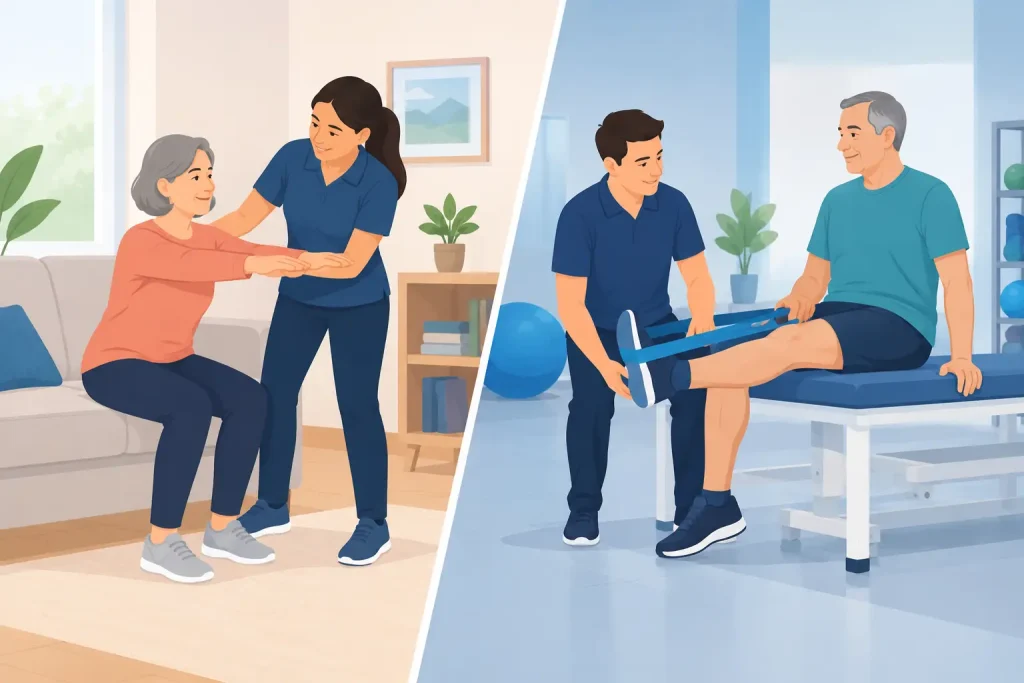
A knee replacement, stroke, fracture, or painful back injury can make the trip to a clinic feel like part of the problem. When comparing home rehabilitation versus outpatient therapy, the better choice is not always the same for every patient. It depends on your medical needs, mobility, home support, recovery goals, and the level of equipment or specialist care required.
For many families in Dubai, home-based therapy offers a safer, more practical way to begin recovery. For others, an outpatient setting may provide resources that are difficult to replicate at home. Understanding the difference can help you arrange care that supports progress without adding unnecessary stress.
What Is Home Rehabilitation?
Home rehabilitation brings a qualified physiotherapist, occupational therapist, speech therapist, or nursing professional to the patient’s home. Sessions are planned around the patient’s condition and may focus on restoring movement, improving balance, managing pain, rebuilding strength, practicing daily activities, or supporting communication and swallowing after a neurological event.
The home itself becomes part of the treatment plan. Rather than practicing walking only in a clinic hallway, a therapist can observe how a patient gets out of bed, moves through a narrow bathroom, uses the stairs, or prepares a meal. This practical view can reveal barriers that may otherwise delay recovery.
Home rehabilitation is often appropriate after surgery, hospitalization, injury, or a decline in mobility. It can also support older adults who need ongoing exercise, fall-prevention work, or help maintaining independence. Care should be delivered by licensed, clinically supervised professionals who assess the patient, set measurable goals, and adjust the plan as recovery changes.
What Is Outpatient Therapy?
Outpatient therapy takes place at a clinic, rehabilitation center, or hospital department. The patient travels to scheduled appointments and receives treatment in a dedicated setting. Depending on the facility, this may include access to larger exercise equipment, specialized machines, treatment tables, or multiple rehabilitation disciplines in one location.
This option can work well for patients who are medically stable, able to travel comfortably, and motivated by a structured clinical environment. It may also be recommended when a person needs equipment-intensive rehabilitation or close coordination with specialists based at the same facility.
The main commitment is the travel itself. A therapy session may last an hour, but transportation, parking, waiting, and returning home can turn it into a much longer task. For a person in pain, recovering from surgery, caring for a newborn, or managing an elderly relative’s appointments, that extra effort can affect how consistently therapy happens.
Home Rehabilitation Versus Outpatient Therapy: Key Differences
The clearest difference is where care happens, but the setting influences nearly every part of the experience. Home rehabilitation is centered on comfort, daily function, and convenience. Outpatient therapy is centered on access to a clinic-based environment and equipment.
At home, the therapist works with the patient’s real routines. A person recovering from hip surgery may practice standing safely from their own sofa, stepping into their shower, and navigating the route from bedroom to kitchen. For an older adult, a therapist can identify loose rugs, poor lighting, or unsafe footwear that increase fall risk. These details make treatment highly personal and immediately relevant.
At an outpatient clinic, the patient may benefit from a wider selection of machines and a more controlled training space. This can be valuable for some sports injuries, advanced strengthening programs, or complex cases where specialized equipment is central to the treatment plan. It can also suit people who prefer to separate therapy from home life.
Neither option is automatically better. A patient may even use both at different stages. Home visits can be especially useful in the early phase, when mobility is limited and safety is the priority. Outpatient sessions may become more suitable later, when endurance improves and the patient is ready for higher-level conditioning.
When Home-Based Therapy May Be the Better Fit
Home rehabilitation is often a strong choice when leaving the house is difficult, tiring, or unsafe. Patients commonly benefit after orthopedic surgery, during post-hospital recovery, after a stroke, or when chronic conditions affect balance and mobility.
It can also reduce missed appointments. Consistency matters in rehabilitation because progress is built through repeated, guided practice. When the clinician comes to the home, patients do not need to arrange transport, wait in traffic, or depend on a family member to accompany them. That saved time can make it easier to complete a full course of care.
Families may also value the ability to participate. A therapist can teach a spouse, adult child, or caregiver how to support exercises safely between visits. This does not mean family members replace professional care. It means they better understand safe transfers, mobility precautions, positioning, and the encouragement that helps a loved one stay engaged.
For children or adults receiving speech therapy, a familiar setting can be particularly helpful. The therapist can work with everyday communication situations and coach family members on techniques that can be used naturally throughout the day.
When Outpatient Therapy May Be More Appropriate
Outpatient therapy may be the right choice when treatment requires specialized equipment that is not available at home. A clinician may also recommend a facility-based program when a patient needs more intensive monitoring, multiple therapies coordinated in one location, or advanced exercise progression.
Patients who can travel independently and enjoy a structured routine may find the clinic environment motivating. Some people work harder when they are surrounded by equipment and other patients focused on recovery. For athletes returning to demanding activity, a specialized outpatient program may offer sport-specific assessment and training that goes beyond typical early-stage home care.
Medical complexity matters as well. If a patient experiences new shortness of breath, chest pain, confusion, fever, wound concerns, sudden weakness, or worsening symptoms, rehabilitation should not be treated as the only answer. Contact a physician or seek urgent medical guidance. A safe therapy plan begins with knowing when a patient needs medical evaluation first.
How to Make the Right Decision for Your Family
Start with the patient’s current ability, not just the diagnosis. Can they get in and out of a car safely? Does travel worsen pain or fatigue? Are stairs, transfers, or bathroom use difficult? Are there family members who need training to provide safer support at home?
Then consider the clinical plan. Ask the treating physician or therapist what goals matter most in the next few weeks. If the goal is basic mobility, safe movement at home, pain management, and independence with daily tasks, home care may be highly effective. If the goal requires equipment-based strength training or specialized testing, outpatient therapy may be more appropriate.
It is also reasonable to ask practical questions before booking. Confirm the clinician’s license and relevant experience, how progress will be measured, how the treatment plan will be updated, and what happens if the patient’s condition changes. Clear communication gives families confidence and helps prevent fragmented care.
Your Choice Healthcare provides personalized home physiotherapy and rehabilitation support for patients who need professional care without the strain of repeated clinic travel. A qualified team can help assess whether in-home treatment fits the patient’s current condition and recovery goals.
Recovery Should Fit Real Life
The best rehabilitation setting is the one that allows safe, consistent, clinically appropriate care. For some patients, that means a well-equipped outpatient clinic. For others, especially those recovering after surgery or managing limited mobility, the most meaningful progress begins at home – in the spaces where they need to live confidently every day.
Choose a plan that respects both medical needs and daily reality. When therapy feels manageable, personal, and supported, patients are more likely to stay with it and take the next step forward.