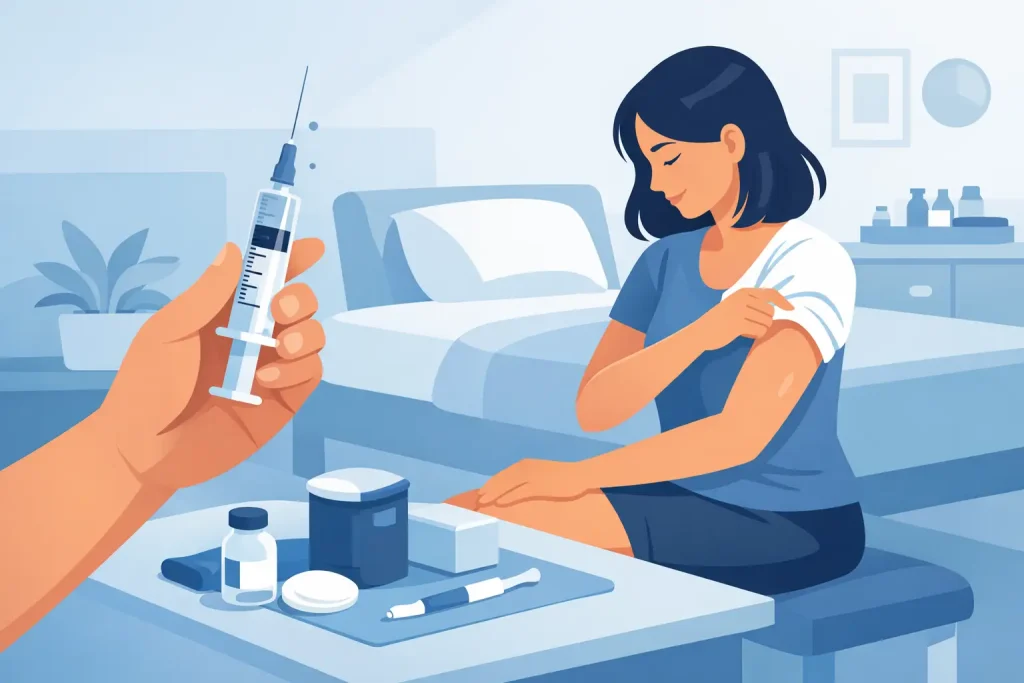
A prescribed injection can be a routine part of care, but it should never feel like guesswork at the kitchen table. Whether it is insulin, an anticoagulant, a vitamin injection, fertility medication, or another treatment, knowing how to manage home injections begins with one rule: follow the exact plan provided by the prescribing clinician. The medication, dose, timing, injection route, and site all matter.
For many families in Dubai, home treatment makes recovery and long-term care more comfortable. It can also place practical responsibilities on patients and caregivers. A calm setup, correct technique, and a clear plan for problems can reduce avoidable pain, missed doses, and medication errors.
Start With a Clear Clinical Plan
Before the first dose is given at home, make sure a doctor, nurse, or pharmacist has explained the medication in terms you can repeat back. You should know what the medicine is for, how much to administer, what time to give it, where it should be injected, how it must be stored, and what side effects require help.
Do not assume that two injectable medicines work the same way. Some are injected just under the skin, while others are given into muscle or through an IV line. These routes are not interchangeable. A medication intended for subcutaneous injection should not be injected into muscle simply because a caregiver is more familiar with that technique.
If the instructions on the prescription label, discharge paperwork, or medication package do not match what you were told, pause and confirm with the prescribing team before proceeding. The safest injection is the one that is fully understood.
Keep a simple medication record
A written log is especially helpful when more than one family member helps with care, or when several medicines are due each day. Record the date, time, medication name, dose, injection site, and any reaction afterward. This prevents accidental double dosing and gives a visiting clinician useful information if symptoms change.
For medicines that need site rotation, such as insulin or some blood-thinning injections, note the area used each time. Repeated injections in exactly the same spot can lead to bruising, lumps, tenderness, or changes in the tissue that affect absorption.
Prepare the Medication and Your Space
Home injections should be prepared in a clean, well-lit area away from food preparation, pets, and distractions. You do not need a clinical room, but you do need a controlled space where supplies are easy to see and reach.
Wash your hands thoroughly with soap and water before handling supplies. Gather everything first so you are not leaving a prepared medication unattended. Depending on the prescribed treatment, this may include the medication, syringe or pen, a new needle, alcohol swabs, gauze or cotton, a sharps container, and your medication record.
Check the medication every time. Confirm the patient name, medication name, dose, expiration date, and appearance. Do not use a vial, pen, or syringe if the liquid is cloudy, discolored, leaking, frozen, or contains particles when it should be clear. Some medications are meant to look cloudy, so rely on the product instructions and clinician guidance rather than guessing.
Storage also affects safety. Many injections require refrigeration, while others must be kept at room temperature after first use for a limited period. Keep medication in its original packaging when possible, protect it from excessive heat and direct sunlight, and do not store it in a bathroom where humidity and temperature may fluctuate. Never freeze a medication unless the manufacturer specifically says it is safe to do so.
How to Manage Home Injections With Safer Technique
Technique should be taught in person whenever possible, particularly for a new medication or a caregiver who has not given injections before. Watching a demonstration, practicing under supervision, and asking questions can make a major difference in confidence and safety.
Follow the prescribed method rather than relying on general online advice. Needle length, angle, skin preparation, and whether to pinch the skin can vary based on the medicine, injection route, patient age, body type, and device being used.
For most home injections, a few principles apply:
- Use a new, sterile needle and syringe for every injection.
- Clean the selected site as instructed and allow the skin to dry before injecting.
- Avoid skin that is bruised, scarred, swollen, infected, numb, or unusually tender.
- Rotate approved injection sites according to the care plan.
- Never share pens, needles, syringes, or lancets, even between family members.
Do not rush because the patient is anxious or the household is busy. A brief pause to verify the medication and dose is far safer than trying to correct an error afterward. If a dose is missed, do not automatically double the next one. The right response depends on the medication and timing, so contact the prescribing clinician or pharmacist for specific guidance.
Helping children, older adults, and anxious patients
Some patients need more than technical accuracy. A child may be frightened by the sight of a needle, while an older adult may have fragile skin, limited mobility, tremors, poor vision, or memory concerns. In these situations, prepare supplies out of sight when appropriate, explain each step in simple language, and position the patient comfortably before beginning.
If the patient moves unexpectedly, becomes distressed, or you are unsure you can safely complete the injection, stop. There is no benefit in forcing a procedure. A qualified nurse can provide treatment with a calm, patient-centered approach and teach family caregivers what is appropriate to manage between visits.
Dispose of Needles Immediately and Correctly
Used needles are a household safety risk, not regular trash. Put the needle and syringe directly into an approved sharps container immediately after use. Do not recap, bend, break, or remove needles by hand unless your clinician has specifically instructed you to use a safety device in a particular way.
Keep the sharps container upright, closed when not in use, and out of reach of children and pets. Do not overfill it. Once it reaches the marked fill line, follow local guidance or ask your healthcare provider about safe disposal options. Never place loose needles in recycling, household garbage bags, glass jars, or plastic water bottles.
If someone is accidentally pricked by a used needle, wash the area with soap and water without squeezing aggressively. Seek urgent medical advice promptly, particularly if the needle was used by another person or the medication involved carries a risk of infection or injury.
Know When Home Nursing Support Is the Better Choice
Self-injection can be practical for stable treatments when a patient or caregiver has received proper training. It may not be the best choice after surgery, during acute illness, when mobility is limited, or when the medication is complex. IV medications, unfamiliar intramuscular injections, injectable antibiotics, and treatments requiring observation should be handled by an appropriately qualified clinician.
Professional support is also sensible when there have been repeated missed doses, significant bruising, injection-site problems, fainting, severe anxiety, or uncertainty about preparation. Convenience should never mean compromising clinical oversight.
Your Choice Healthcare can arrange qualified home nursing support in Dubai for patients who need injections administered with professional care, as well as guidance for families managing an ongoing treatment plan. Home visits can be particularly helpful for elderly patients, post-treatment recovery, new parents, and busy adults who need dependable care without a clinic trip.
Watch for Reactions That Need Medical Attention
Mild soreness or a small bruise can occur after some injections. However, worsening pain, spreading redness, warmth, swelling, drainage, a persistent hard lump, fever, or a rash near the injection site should be assessed by a clinician.
Seek emergency medical help immediately for trouble breathing, swelling of the face or throat, widespread hives, severe dizziness, fainting, chest pain, confusion, or signs of a severe allergic reaction. These symptoms require urgent evaluation, even if they appear shortly after an injection that has been used before.
Also contact the prescribing team if the patient has unusual bleeding, severe vomiting, major changes in blood sugar, or symptoms specific to the medication’s known risks. Keep the medicine packaging available so healthcare professionals can quickly identify what was given and when.
Home injections are most manageable when the process is organized, the instructions are clear, and help is available when circumstances change. If a step does not feel safe or certain, asking for a nurse’s support is a practical decision that protects both the patient and the caregiver.