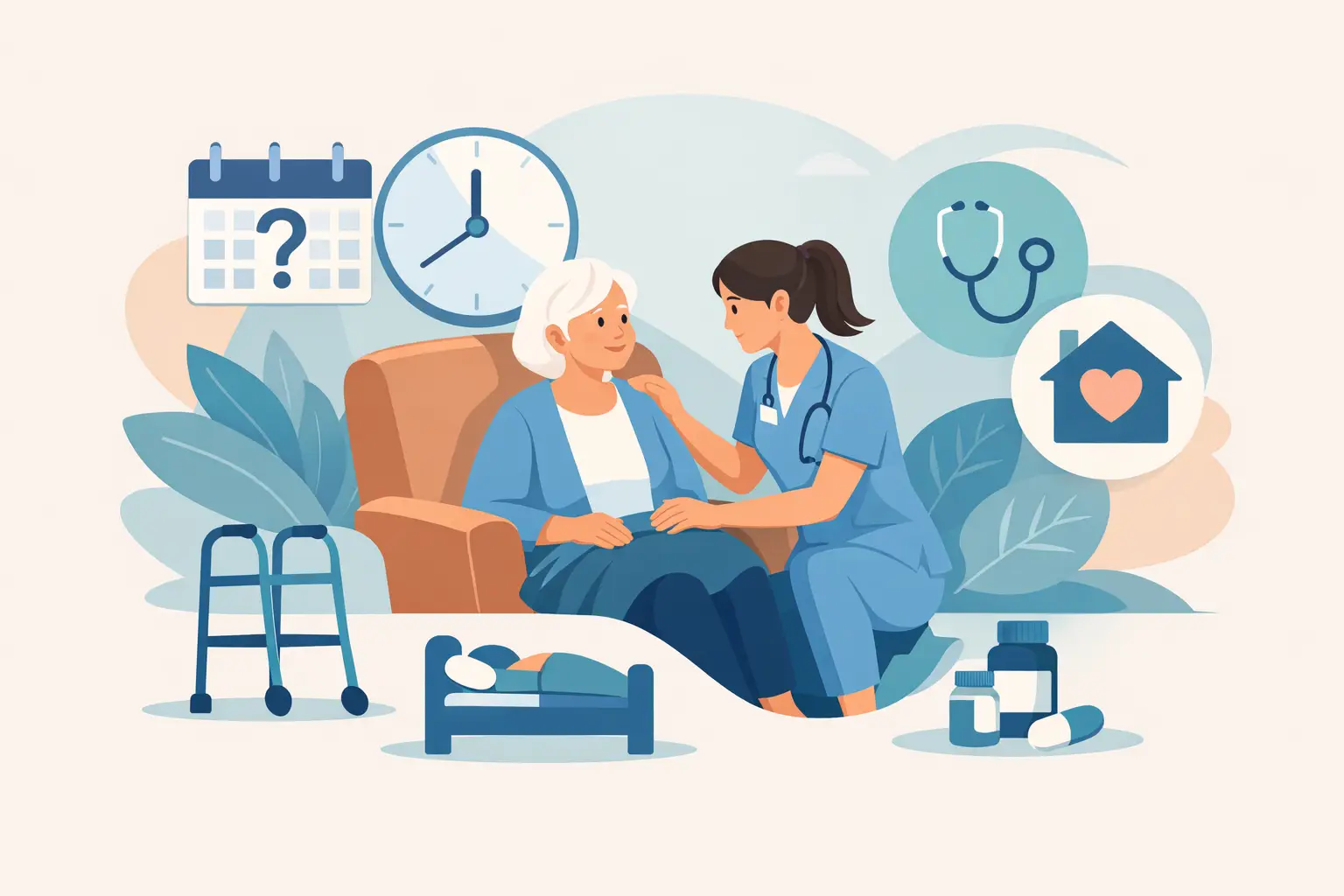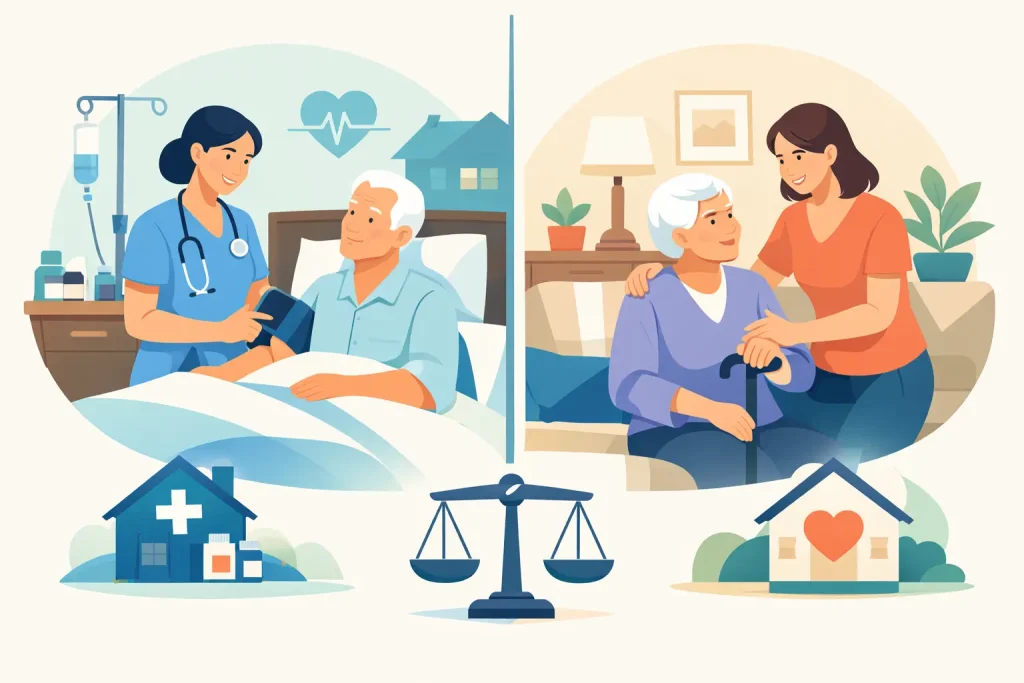
A parent is returning home after surgery. An elderly relative is becoming less steady on their feet. A newborn needs careful support while a mother recovers. In each case, families often ask the same question: home nursing versus caregiver – which service is right for us?
The answer depends on what kind of support is needed, how medically complex the situation is, and whether care is required for a short recovery period or as part of daily life. Both services can make home life safer and more comfortable. The key is choosing the right level of professional care from the start.
Home Nursing Versus Caregiver: The Core Difference
Home nursing is clinical care delivered by a qualified, licensed nurse in the patient’s home. It is appropriate when a person needs medical observation, treatment, rehabilitation support, or skilled procedures that should be performed by a healthcare professional.
A caregiver provides practical, non-medical assistance with everyday routines. This may include help with mobility, bathing, dressing, meals, companionship, reminders, and general supervision. Caregiving is especially valuable for seniors, people with limited mobility, and families who need reliable support with daily living.
Put simply, a nurse treats and monitors health needs. A caregiver helps a person live safely and comfortably at home. In some situations, a family benefits from both.
When Home Nursing Is the Better Choice
Choose home nursing when there is an active medical need or a condition that requires clinical judgment. A licensed nurse can assess changes in symptoms, follow a physician’s care plan, document observations, and escalate concerns when needed.
This service is often the right fit after hospitalization or surgery. A patient may need wound dressing changes, injections, IV therapy, medication administration, catheter care, vital sign monitoring, or post-operative observation. Home nursing can also support people managing chronic conditions such as diabetes, heart disease, respiratory illness, or neurological disorders.
For families, the benefit is not only convenience. It is confidence that care is being delivered by a trained professional in a familiar environment. That can reduce unnecessary clinic visits while helping patients follow their recovery plan consistently.
Clinical support after surgery or illness
The first days and weeks after discharge can feel uncertain. A patient may be weak, in pain, or unsure how to manage medications and mobility at home. A home nurse can provide structured support during this period, monitor healing, and help identify warning signs early.
Nursing visits may be short and focused, such as a scheduled injection or dressing change. They can also be arranged as longer shifts for patients who need close observation. The right schedule depends on the physician’s instructions and the patient’s condition.
Complex needs require qualified care
Some tasks should never be assigned to an untrained helper. These include invasive procedures, medication administration requiring clinical oversight, IV management, assessment of pressure injuries, and response to sudden changes in condition.
If a loved one has confusion, fever, worsening pain, breathing difficulty, new swelling, reduced appetite after surgery, or signs of infection, the issue may require a nurse or doctor rather than routine caregiving. Families should not feel pressured to guess. Clinical guidance helps prevent small concerns from becoming larger problems.
When a Caregiver Is the Better Choice
A caregiver is often ideal when the main need is consistent support with everyday activities rather than medical treatment. This can be a practical and compassionate choice for an older adult who wants to remain independent at home but needs a helping hand.
Caregivers can assist with personal hygiene, dressing, safe movement around the home, meal preparation, hydration reminders, light household routines, and companionship. They may also help families create a predictable routine, which can be especially reassuring for seniors with memory concerns or reduced mobility.
Caregiver support is not a lesser form of care. It addresses the daily details that strongly affect a person’s well-being: eating properly, staying clean and comfortable, moving safely, taking breaks, and having someone present who notices when routines change.
Support for aging parents
Families in Dubai often balance demanding work schedules, children, travel, and the responsibility of caring for aging parents. A caregiver can provide dependable daytime, overnight, or live-in support based on the family’s needs.
The goal is not to take independence away. It is to make independence safer. With the right assistance, an older adult may continue enjoying familiar surroundings, family meals, prayer, hobbies, and daily routines with less risk of falls or isolation.
Companionship matters too
Loneliness can affect appetite, sleep, motivation, and overall quality of life. A caregiver provides conversation and reassurance alongside practical assistance. For someone who spends long hours alone, this human connection can be as meaningful as help with meals or mobility.
Still, companionship does not replace medical monitoring. If an elderly person has unstable health, frequent symptoms, or a physician-directed care plan, caregiver support should be paired with nursing oversight where appropriate.
Can a Patient Need Both Services?
Yes. Many families need a combined plan, particularly after major surgery, during long-term illness, or when caring for a senior with both medical and daily living needs.
For example, a nurse may visit to manage a wound, administer treatment, assess recovery, and communicate clinical updates. A caregiver may then support safe mobility, meals, hygiene, and companionship between nursing visits. This approach gives the patient continuity without paying for a clinical service when non-medical help is what is needed.
A combined plan can also ease the pressure on family members. Relatives remain involved in decisions and emotional support while trained professionals handle the tasks that require time, skill, or physical assistance.
Questions to Ask Before Choosing Care at Home
Start with the person’s actual needs rather than the service name. Is there a doctor’s order, a recent hospital discharge, a wound, injections, IV treatment, or a condition that needs regular monitoring? If so, home nursing should be part of the discussion.
If the concern is help with bathing, preparing meals, walking safely, remembering routines, or having someone nearby during the day, a caregiver may be the right starting point. Consider how often help is needed as well. A brief nursing visit can address a clinical procedure, while daily caregiver support may be more suitable for ongoing practical needs.
It is also wise to ask who supervises the care, what qualifications the provider verifies, and how quickly support is available if the patient’s condition changes. In-home care should feel organized, respectful, and responsive – not uncertain or improvised.
Choosing Trusted Home Care in Dubai
The quality of care matters as much as the type of care. Look for DHA-certified healthcare professionals, clear care plans, respectful communication, and a provider that understands when a patient needs nursing attention, caregiver support, or a doctor’s evaluation.
Your Choice Healthcare provides personalized home healthcare services across Dubai, with qualified professionals who can support recovery, elderly care, newborn care, and ongoing wellness needs. For urgent concerns or planned support, a responsive team can help families arrange the appropriate level of care without the stress of traveling to a clinic.
The best choice is the one that protects health while preserving comfort and dignity. When you are unsure, describe your loved one’s symptoms, routine, and level of independence clearly. The right care plan begins with listening closely to what life at home truly requires.