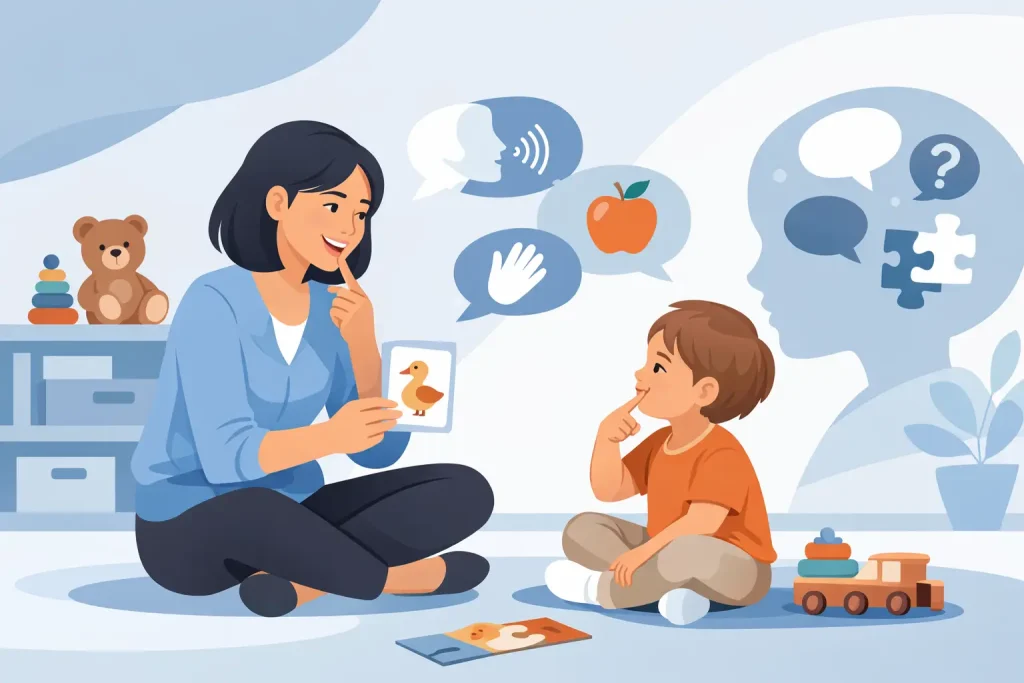
A toddler who points, pulls you toward the snack cabinet, or melts down when no one understands them is communicating – just not always with words. For parents, the question is rarely whether their child is trying. It is whether they need extra support to be understood. Speech therapy for toddlers can help children build the communication skills that make daily life less frustrating, from asking for water to joining play with a sibling.
Every child develops at a different pace, and a late talker does not automatically have a speech or language disorder. Still, waiting without guidance can feel stressful when a child has few words, is difficult to understand, or seems unable to follow simple directions. A professional assessment offers clarity and a practical path forward.
What Speech Therapy for Toddlers Supports
Toddler speech therapy is not limited to teaching a child to pronounce individual sounds. At this age, communication includes understanding language, using gestures and words, taking turns, making sounds, playing with purpose, and expressing needs without distress.
A speech-language therapist may support receptive language, which is what a child understands, and expressive language, which is what they can communicate through sounds, words, signs, or short phrases. Therapy may also address speech clarity, feeding or oral-motor concerns when appropriate, social communication, and early interaction skills.
Sessions should feel engaging rather than like a classroom lesson. A therapist may use favorite toys, picture books, bubbles, pretend play, songs, or daily routines to encourage communication. The goal is to create reasons for your child to interact, then give them effective ways to do so.
Signs Your Toddler May Benefit From an Assessment
Parents often notice small patterns before anyone else does. Perhaps your child uses the same sound for many things, becomes upset during mealtimes, or watches other children play but does not join in. One sign alone does not provide a diagnosis, but a group of concerns is worth discussing with a qualified clinician.
Consider an assessment if your toddler is not using gestures such as pointing or waving, has very few meaningful words, does not seem to understand familiar requests, or loses skills they once used. It can also help when speech is unusually hard for close family members to understand, when your child rarely attempts to copy sounds or words, or when communication struggles lead to frequent frustration.
Hearing matters, too. Ear infections, fluid in the ears, and other hearing concerns can affect how a child receives speech sounds. If language development is delayed or speech is unclear, a healthcare professional may recommend a hearing check alongside a speech and language evaluation.
The most urgent reason to seek advice is regression. If a child stops using words, gestures, social responses, or other skills they previously had, contact their pediatrician or healthcare provider promptly.
What Happens During a Toddler Speech Assessment
A good assessment starts by listening to the family. The therapist will ask about pregnancy and birth history, health concerns, hearing, feeding, developmental milestones, languages spoken at home, and the situations where communication is easiest or hardest.
The child is then observed through play and everyday interaction. A therapist may look at how your toddler responds to their name, follows simple directions, shares attention, uses eye contact and gestures, imitates actions, makes sounds, and plays with objects. Formal testing may be used when suitable, but young children often show their clearest skills while they are comfortable and playing.
At the end, the family should understand what the therapist observed, which skills are developing well, and where support may be useful. If therapy is recommended, the plan should include realistic goals. For one child, that may mean using a gesture or word to request. For another, it may mean combining two words, following directions, or improving speech clarity.
Why Home-Based Therapy Can Work Well
Toddlers learn communication in the places where they eat, play, dress, and spend time with the people they trust. Home-based sessions allow a therapist to see the child in a familiar environment and build therapy around real routines.
For example, a therapist may show a parent how to pause before opening a snack, model a simple word during bath time, or create turn-taking during a favorite game. These small adjustments can create many communication opportunities without adding pressure to an already busy day.
Home care also reduces the disruption of traveling to appointments, waiting in a clinic, and asking a tired toddler to adapt to an unfamiliar setting. This can be particularly helpful for Dubai families balancing work, school schedules, newborn care, or support for older relatives.
That said, the setting is only one part of successful therapy. Some children focus well in a clinic, especially if they benefit from a structured environment or access to specialized equipment. What matters most is an appropriate assessment, a skilled therapist, consistent practice, and a plan that fits the child and family.
How Parents Can Support Progress Between Sessions
Therapy is most effective when communication practice continues naturally throughout the week. You do not need to turn every moment into a lesson. Instead, follow your child’s interests and make language simple, meaningful, and easy to repeat.
If your child reaches for a ball, hold it near your face and say, “Ball.” If they say “ba,” respond warmly: “Ball! You want the ball.” This gives them a successful communication experience while modeling the next step. Avoid repeatedly asking, “What is this?” or insisting that they repeat a word. Pressure can make some children withdraw from talking.
Try to give your child a little extra wait time. Adults often anticipate a toddler’s needs quickly, especially when they are upset. Pausing for a few seconds after offering a choice can give them a chance to point, look, gesture, make a sound, or use a word.
Reading together also helps, even when a toddler will not sit through a whole book. Point to pictures, name what your child notices, copy animal sounds, and let them turn pages. Short, enjoyable interactions repeated often are more valuable than a long activity that ends in tears.
For bilingual or multilingual families, using the language that feels most natural at home is generally beneficial. Children can learn more than one language. A therapist can help the family understand how to support communication across the languages used in their daily life rather than asking parents to abandon a meaningful home language.
Choosing the Right Support for Your Child
Look for a licensed speech-language professional with experience working with young children. Ask how the therapist assesses communication, how goals will be measured, how parents are involved, and how often progress will be reviewed. Clear communication matters: you should leave sessions knowing what to practice and why it supports your child.
At Your Choice Healthcare, home speech therapy is designed around the child’s needs, family routines, and comfort at home. A qualified therapist can help parents move from uncertainty to a clear, personalized plan, with professional support delivered where daily communication happens most.
A toddler does not need perfect pronunciation or long sentences to make meaningful progress. The first wins may be quieter: a new gesture at breakfast, a sound used on purpose, a word said during play, or fewer tears because your child can finally make themselves understood. Those moments are where confidence begins.