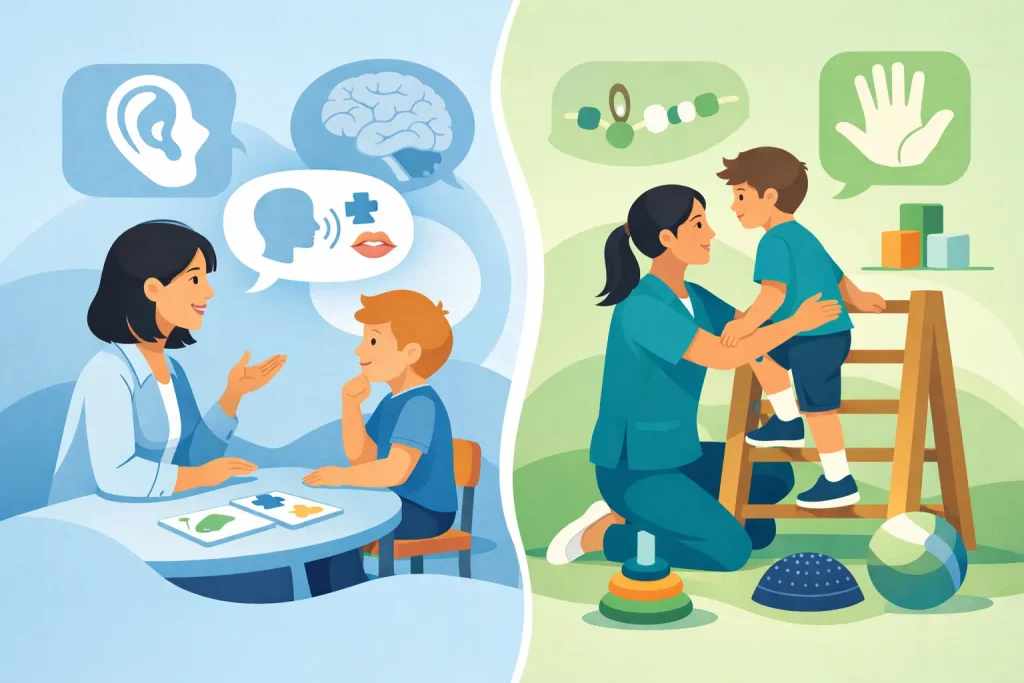
A child may understand every word you say but struggle to express a need. An older adult may speak clearly after a stroke yet find it difficult to hold a spoon, get dressed, or move safely through the bathroom. These are different challenges, which is why the choice between a speech therapist versus occupational therapist matters. Both professionals support independence, recovery, and quality of life, but they focus on different parts of daily function.
For families in Dubai arranging care at home, knowing the difference can make the next step feel less overwhelming. The right therapy plan should reflect the person’s specific needs, home environment, medical history, and goals – not just the name of a diagnosis.
Speech therapist versus occupational therapist: the key difference
A speech therapist, also called a speech-language pathologist, helps people communicate and swallow safely. Their work can involve speech clarity, language development, understanding, voice, social communication, and feeding or swallowing concerns.
An occupational therapist helps people take part in everyday activities as independently and safely as possible. Despite the title, occupational therapy is not only about employment. For a child, “occupation” may be playing, learning, getting dressed, or using the toilet. For an adult, it may include cooking, bathing, handwriting, returning to work, managing fatigue, or moving safely around the home.
The simplest distinction is this: speech therapy centers on communication and swallowing, while occupational therapy centers on daily living skills and functional independence. There is meaningful overlap, especially for children with developmental differences and adults recovering from neurological illness or injury.
What a speech therapist can help with
Speech therapy is often recommended when communication is difficult, delayed, changed after illness, or affecting confidence and participation. A therapist begins by assessing how the patient listens, understands, speaks, uses language, and, where relevant, eats and drinks.
For children, a speech therapist may support delayed first words, unclear pronunciation, difficulty forming sentences, stuttering, limited social communication, or challenges following directions. Therapy is usually play-based and adapted to the child’s attention, interests, and developmental stage. Parents are often given practical activities to use between sessions, because consistent practice in familiar routines can make a real difference.
For adults, speech therapy can be valuable after a stroke, brain injury, Parkinson’s disease, dementia, surgery affecting the head or neck, or another condition that changes speech, language, voice, memory, or swallowing. Someone may need help finding words, speaking clearly, understanding conversations, using communication tools, or reducing the risk of coughing and choking while eating.
Swallowing concerns require timely professional attention. Repeated coughing during meals, a wet or gurgly voice after drinking, frequent chest infections, unexplained weight loss, or avoiding food and fluids can indicate a problem that needs assessment. A speech therapist can evaluate swallowing function and recommend safer strategies, food textures, positioning, or referral when needed.
What an occupational therapist can help with
Occupational therapy looks at the practical question: what is making this daily activity hard, and what will help the person do it more safely or independently? The answer may involve exercises, skill-building, changes to the environment, adaptive equipment, or guidance for family caregivers.
For children, occupational therapy commonly addresses fine motor skills, hand strength, pencil control, sensory processing differences, coordination, play skills, self-care routines, and attention during tasks. A child who avoids certain clothes, struggles with buttons, has trouble sitting for meals, or becomes overwhelmed by everyday sounds may benefit from an occupational therapy assessment. Not every picky behavior or developmental variation requires therapy, but persistent challenges that affect home, school, or social life are worth discussing with a qualified clinician.
For adults, an occupational therapist may support recovery after surgery, stroke, fracture, spinal injury, arthritis flare-ups, or prolonged hospitalization. Sessions may focus on bathing, dressing, grooming, eating, transferring from bed to chair, using the bathroom, preparing simple meals, and rebuilding confidence with everyday tasks.
Home-based occupational therapy can be particularly useful because the therapist sees the real environment. They can identify fall risks in a hallway, suggest safer bathroom routines, assess whether a chair or bed setup is appropriate, and teach family members how to provide assistance without putting themselves or the patient at risk.
When a patient may need both therapies
Some needs do not fit neatly into one category. A child with autism spectrum disorder, developmental delay, or a neurological condition may benefit from speech therapy for communication and occupational therapy for sensory regulation, play, and self-care. The two therapists can coordinate goals so a child has more opportunities to communicate during dressing, meals, games, and daily routines.
Adults recovering from a stroke often benefit from both services as well. A speech therapist may help with aphasia, speech changes, or swallowing. An occupational therapist may help the same patient relearn dressing, safe transfers, hand use, and home routines. Physical therapy may also be appropriate if walking, balance, strength, or mobility are affected.
This is why a good care plan should not force families to choose one service too early. An assessment can clarify priorities and identify whether one therapist, both therapists, or a wider rehabilitation team is the best fit.
Signs that can guide your decision
Consider speech therapy first if the main concern is talking, understanding language, pronunciation, voice, stuttering, social communication, feeding, or swallowing. For example, a toddler who rarely uses words, a school-age child others cannot understand, or an adult who has new difficulty speaking after a stroke should be evaluated by a speech therapist.
Consider occupational therapy first if the central issue is completing daily tasks, hand coordination, sensory responses, dressing, bathing, writing, play, or safety at home. This may include an elderly parent who needs help managing routines after a fall, a child struggling with buttons and handwriting, or a patient who cannot safely return to normal activities after surgery.
If the concerns include both communication and function, ask for a coordinated assessment. Families do not need to diagnose the problem themselves. Clear examples of what is happening – such as “she coughs at every meal” or “he cannot put on a shirt without becoming distressed” – give the clinical team useful starting points.
Why therapy at home can be a practical choice
A clinic setting is appropriate for many patients, but home care has advantages when travel is tiring, schedules are demanding, mobility is limited, or the goal is to improve routines where they actually happen. Children may feel more comfortable practicing language and play skills in familiar surroundings. Adults can work on meaningful activities in their own kitchen, bedroom, or bathroom rather than trying to transfer skills from a clinic environment later.
Home visits also allow therapists to involve the people who provide day-to-day support. A parent can learn how to encourage language without turning every interaction into a lesson. A caregiver can practice safe positioning for meals or transfers under professional guidance. This shared approach helps therapy continue beyond the appointment.
Convenience should never replace clinical quality. Look for licensed, experienced professionals who begin with an assessment, set realistic goals, explain the treatment plan, and adjust it as progress or needs change. Therapy is rarely a one-visit solution. Progress can be gradual, particularly after a neurological event or when skills are still developing, but focused treatment and consistent practice can create meaningful gains.
Preparing for the first therapy visit
Before the session, write down the situations that concern you most. Note when they happen, how long they have been occurring, what makes them better or worse, and any relevant medical history. Bring previous reports, medication details, school feedback, or hospital discharge documents if available.
It also helps to identify one or two practical goals. A parent may want their child to ask for help using words. An adult may want to eat and drink more safely, return to independent dressing, or communicate more easily with family. Goals can change over time, but they give therapy a clear and personal direction.
If you are unsure which service to book, start with the concern rather than the job title. Your Choice Healthcare can help families arrange professional, personalized home care and guide the next step based on the patient’s needs. The most helpful first move is often a timely assessment – one that turns a worrying daily struggle into a clear, compassionate plan for progress.