A child develops a fever after bedtime. An elderly parent becomes weak after a new medication. You wake up with worsening pain but cannot leave home easily. In these moments, the choice between a home doctor versus telemedicine is not simply about convenience. It is about getting the right level of clinical attention without adding unnecessary stress to an already difficult situation.
Both options can save time compared with a clinic visit, and both have a valuable place in family healthcare. The better choice depends on symptoms, the patient’s age and mobility, the need for a physical examination, and how quickly treatment may be required.
Home Doctor Versus Telemedicine: The Main Difference
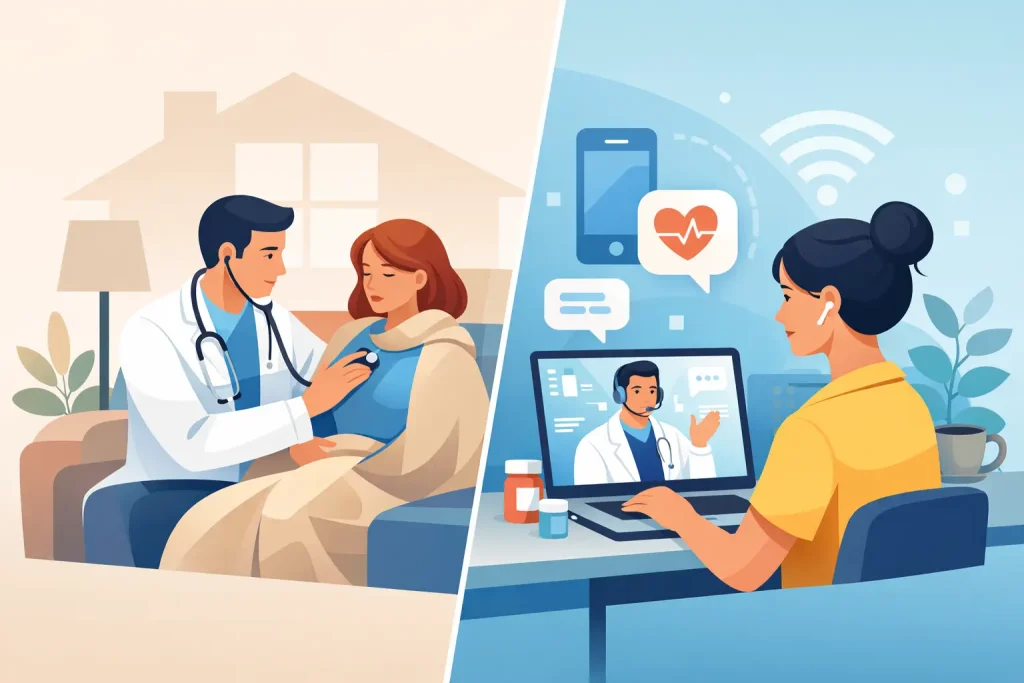
Telemedicine connects a patient with a physician by video or phone. It is often useful for discussing symptoms, reviewing a treatment plan, obtaining guidance for a minor concern, or deciding whether in-person care is needed. The physician can ask focused questions, observe certain visible signs through video, and advise the next step.
A home doctor visit brings a licensed physician to the patient’s residence. The doctor can take vital signs, examine the patient directly, listen to the heart and lungs, assess hydration, inspect a wound, and make a more complete clinical judgment in the setting where the patient is most comfortable.
The difference matters because many symptoms look straightforward at first but require a hands-on assessment. A cough may be a mild viral illness, for example, but it may also need a chest examination and oxygen-level check. Abdominal pain, a spreading rash, dizziness, persistent fever, urinary symptoms, or a change in an elderly person’s behavior can all benefit from an in-home evaluation.
Telemedicine is not lesser care. It is a different care format. When the concern is suitable for remote consultation, it can be a fast and practical first step. When an examination, treatment, or close observation is required, a home visit usually provides more complete support.
When Telemedicine May Be the Right Choice
Remote consultations work best when the physician can safely make recommendations based on the conversation, medical history, and visual information available on a call. It may be appropriate for common, non-urgent concerns such as mild cold symptoms, medication questions, follow-up after a recent consultation, minor skin irritation, or general wellness guidance.
It can also help when you need timely clinical direction before deciding what to do next. A doctor may advise home care, recommend an in-person examination, adjust a plan, or tell you to seek urgent medical attention. For busy professionals and parents managing a mild concern, this can prevent an unnecessary trip outside the home.
Telemedicine has limits, though. Video quality, lighting, and the patient’s ability to describe symptoms can affect the consultation. A physician cannot physically feel swelling or tenderness through a screen, listen to breathing sounds with a stethoscope, or perform diagnostic checks that depend on direct contact. This is particularly relevant for infants, older adults, and patients with multiple health conditions.
When a Home Doctor Visit Is More Appropriate
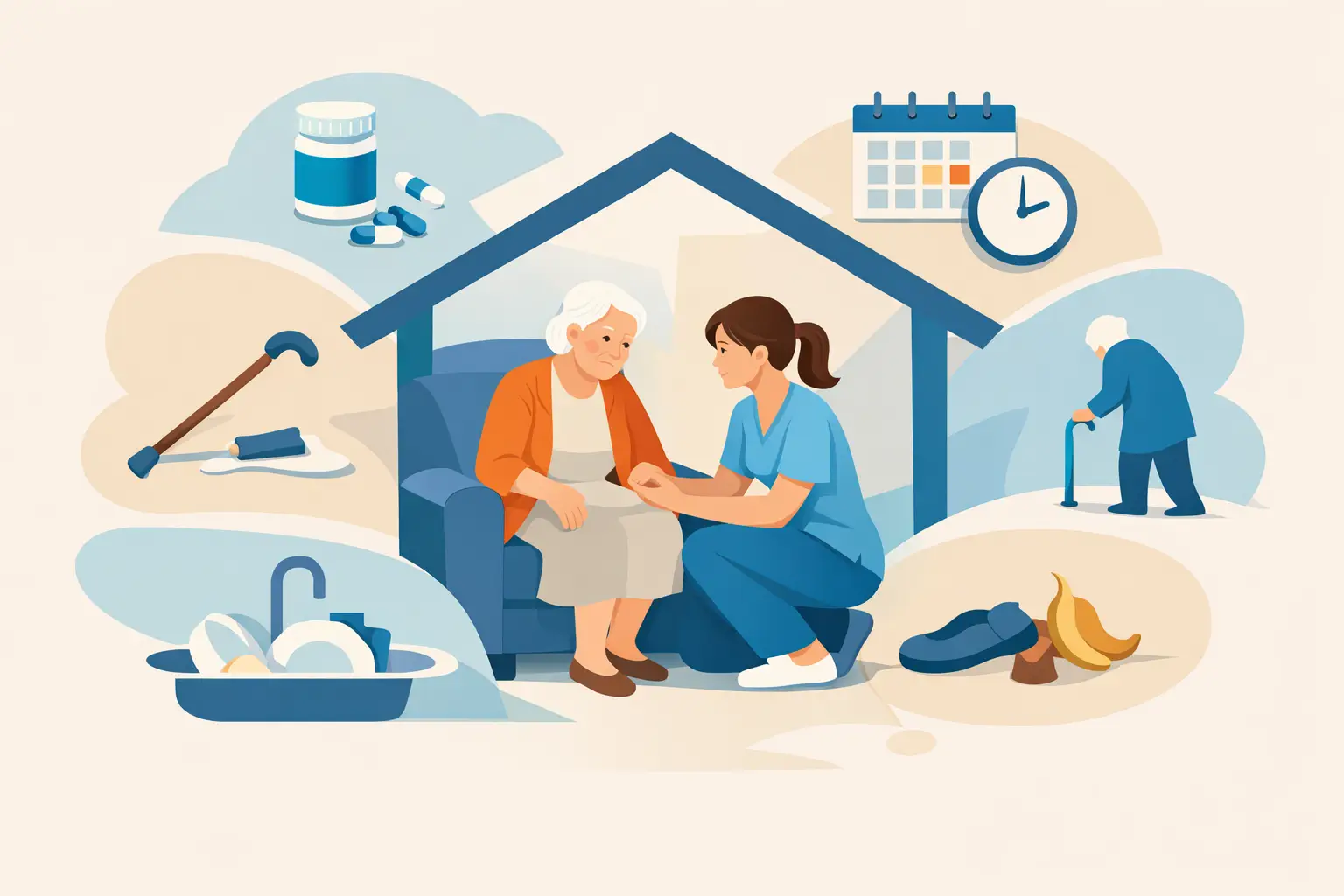
A doctor at home is often the stronger choice when symptoms need a physical examination or when traveling to a clinic would be uncomfortable, difficult, or unsafe. Families may choose this option for a sick child with persistent fever, a senior with weakness or reduced appetite, a patient recovering from surgery, or someone whose symptoms are getting worse rather than better.
The home setting gives the physician useful context as well. They can speak with family members, review medications available in the home, assess mobility concerns, and understand whether the patient has the support needed for recovery. For elderly care and post-treatment care, these details can be as helpful as the examination itself.
An in-home consultation may also lead naturally to the services a patient needs next. Depending on the clinical assessment, this could include nurse visits, lab testing at home, IV therapy when medically appropriate, physiotherapy, or an ongoing recovery plan. Care can continue without asking an unwell patient to navigate traffic, waiting rooms, and repeated appointments.
At Your Choice Healthcare, DHA-certified professionals provide doctor-on-call and home healthcare services in Dubai with a patient-first approach. The goal is simple: bring qualified medical attention to the patient while keeping the process clear, comfortable, and responsive.
Speed, Comfort, and Clinical Confidence
For many families, the practical question is, “Which option gets us help fastest?” Telemedicine can be especially quick when a remote consultation is clinically appropriate. It removes travel completely and allows a doctor to assess whether symptoms can be managed at home or need further attention.
A home visit may take longer than connecting to a video call, but it delivers a more detailed examination once the doctor arrives. This can reduce delays caused by a remote consultation that ends with a recommendation to obtain an in-person assessment anyway. If you already know that a child needs to be examined, a wound needs checking, or an elderly relative is not acting like themselves, arranging a home doctor may be the more direct path.
Comfort is another real factor, not an extra. Young children often rest better at home. Seniors with mobility limitations can avoid the physical strain of traveling. Patients recovering from surgery can receive medical attention without disrupting their recovery routine. A familiar environment can also help family members communicate observations calmly and accurately.
Still, comfort should never replace safety. If symptoms suggest a medical emergency, call emergency services immediately rather than waiting for telemedicine or a home visit. Chest pain, severe breathing difficulty, fainting, sudden confusion, signs of stroke, uncontrolled bleeding, seizures, or a severe allergic reaction require urgent emergency evaluation.
Questions to Ask Before You Choose
Start with the most practical question: does the patient need to be physically examined? If the answer is likely yes, a home doctor is generally more suitable. Think about whether vital signs, breathing, hydration, pain location, wound condition, or mobility need professional assessment.
Next, consider the patient’s risk factors. Infants, pregnant patients, older adults, people with chronic conditions, and anyone recently discharged from a hospital may need a lower threshold for in-person care. A minor symptom can change more quickly in these groups, and a direct assessment may offer greater reassurance.
Then consider what care may be needed after the consultation. If the patient might require blood tests, nursing assistance, medication support, rehabilitation, or monitoring, a home healthcare provider can help coordinate a more complete plan. If the concern is a routine question or a stable follow-up, telemedicine may be all that is needed.
It also helps to prepare for either appointment. Keep a list of symptoms, when they began, current medications, allergies, relevant medical history, and any recent test results. For a child, note fluid intake, urine output, temperature readings, and changes in energy or behavior. Clear details help the physician make safer decisions quickly.
Choosing Care Without Delaying the Next Step
The best choice is not always the least expensive or the fastest on paper. It is the option that matches the patient’s clinical needs. Telemedicine is highly useful for guidance, follow-ups, and concerns that can be assessed remotely. A home doctor visit is better when the value of a hands-on examination outweighs the convenience of a screen.
If you are uncertain, pay attention to change. Symptoms that are persistent, worsening, unusual for the patient, or accompanied by weakness, dehydration, high fever, significant pain, or breathing concerns deserve more than guesswork. Choosing an in-home assessment can give your family a clearer clinical answer while allowing the patient to remain where they feel safest: at home.